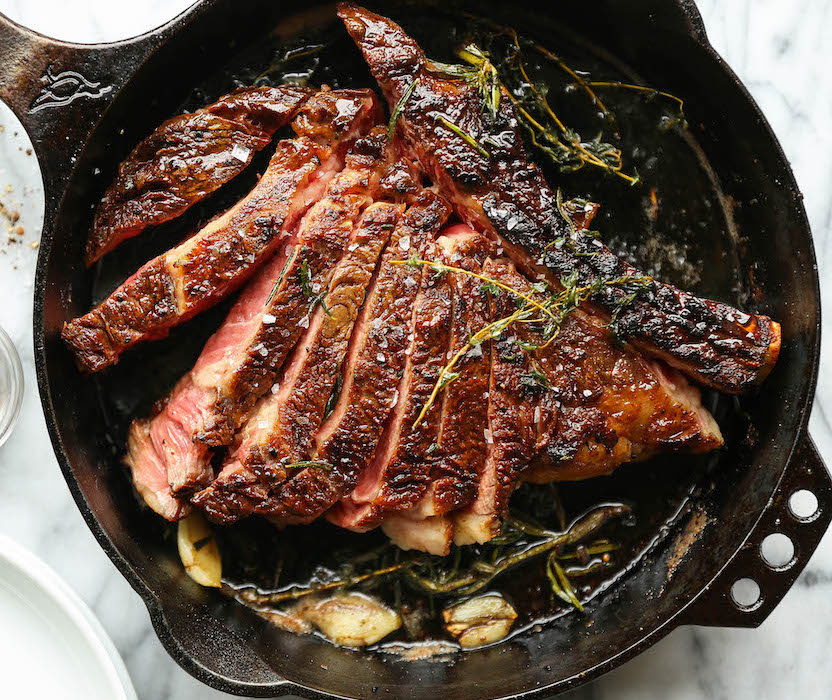
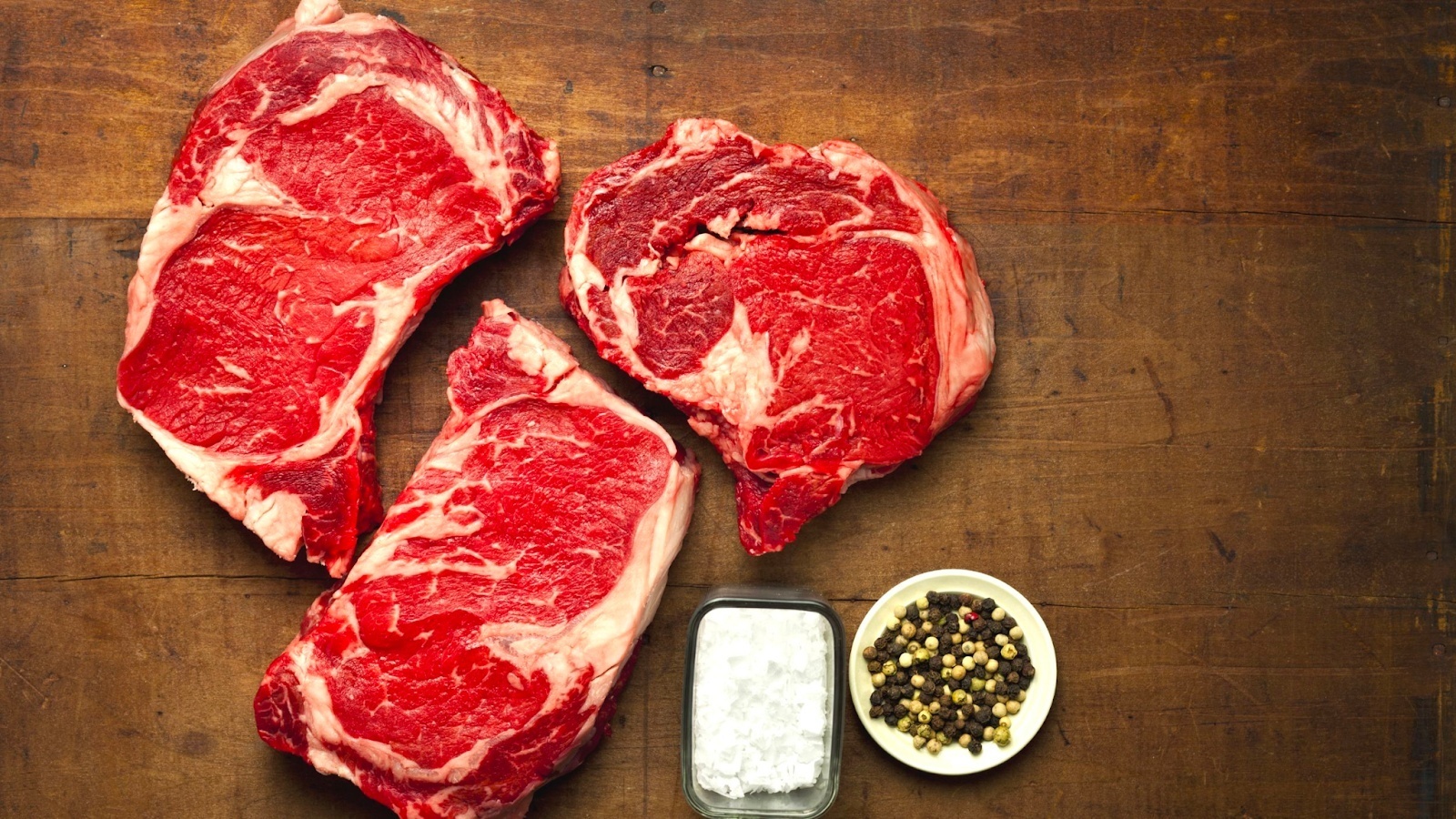
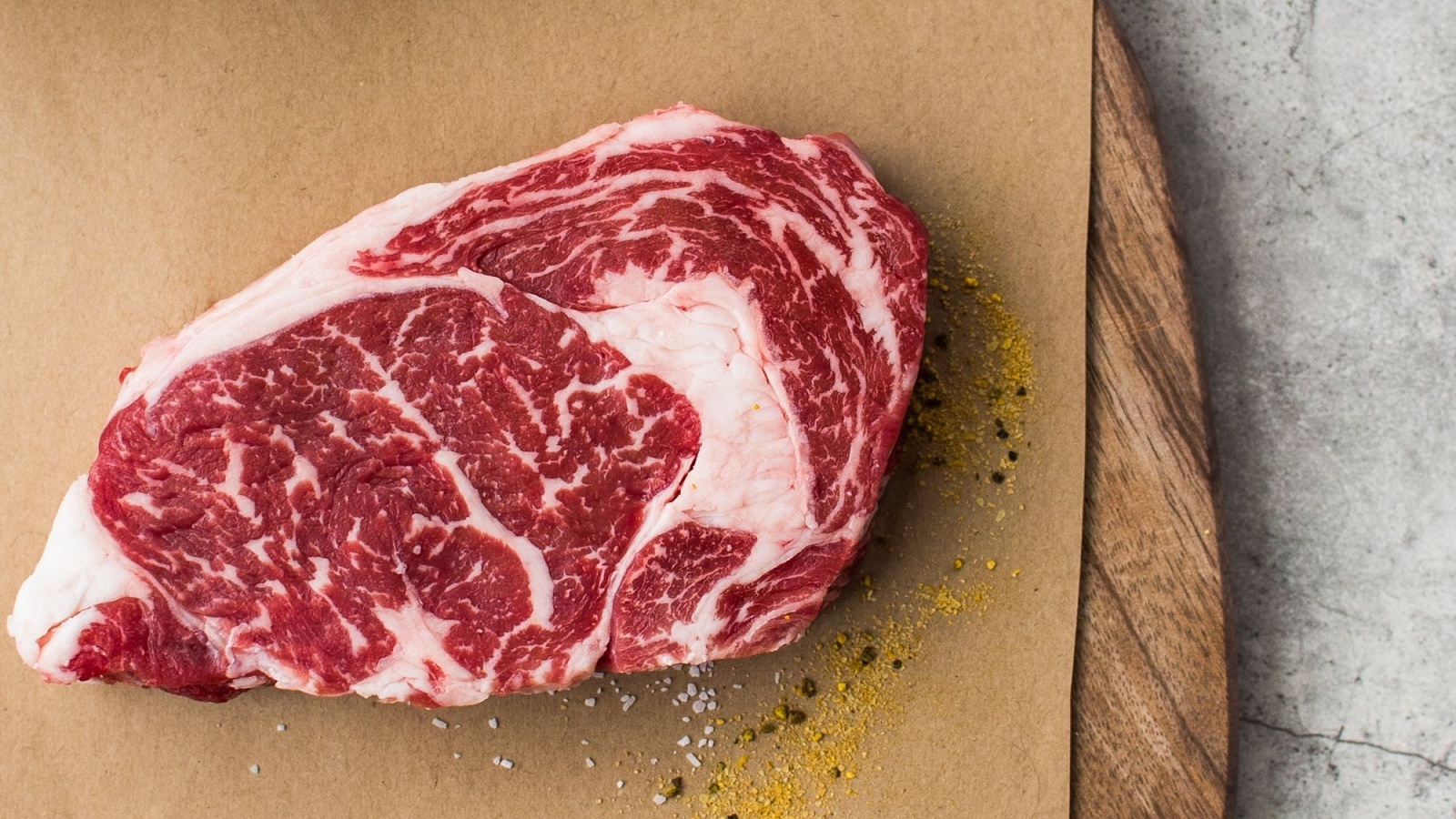
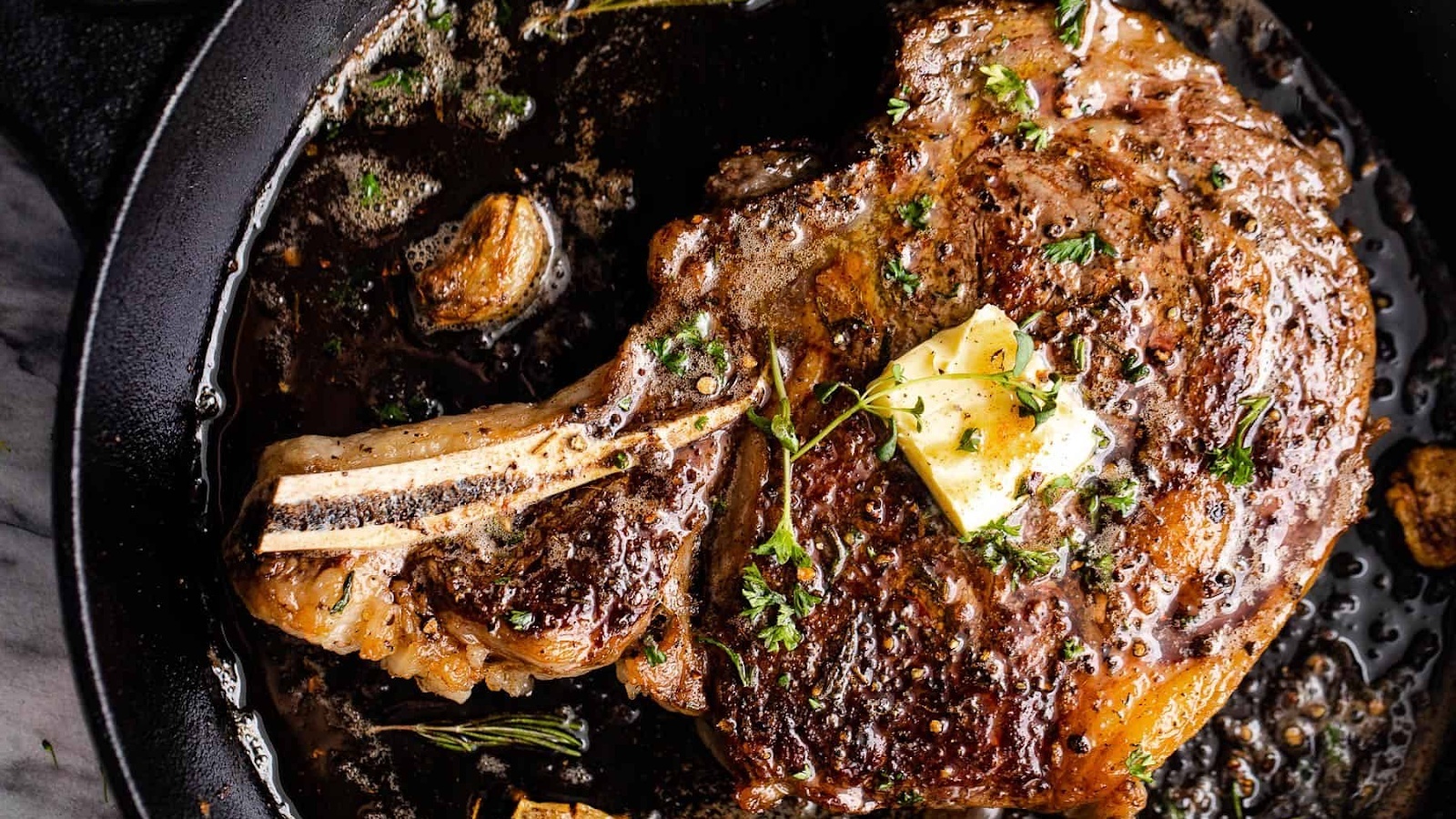
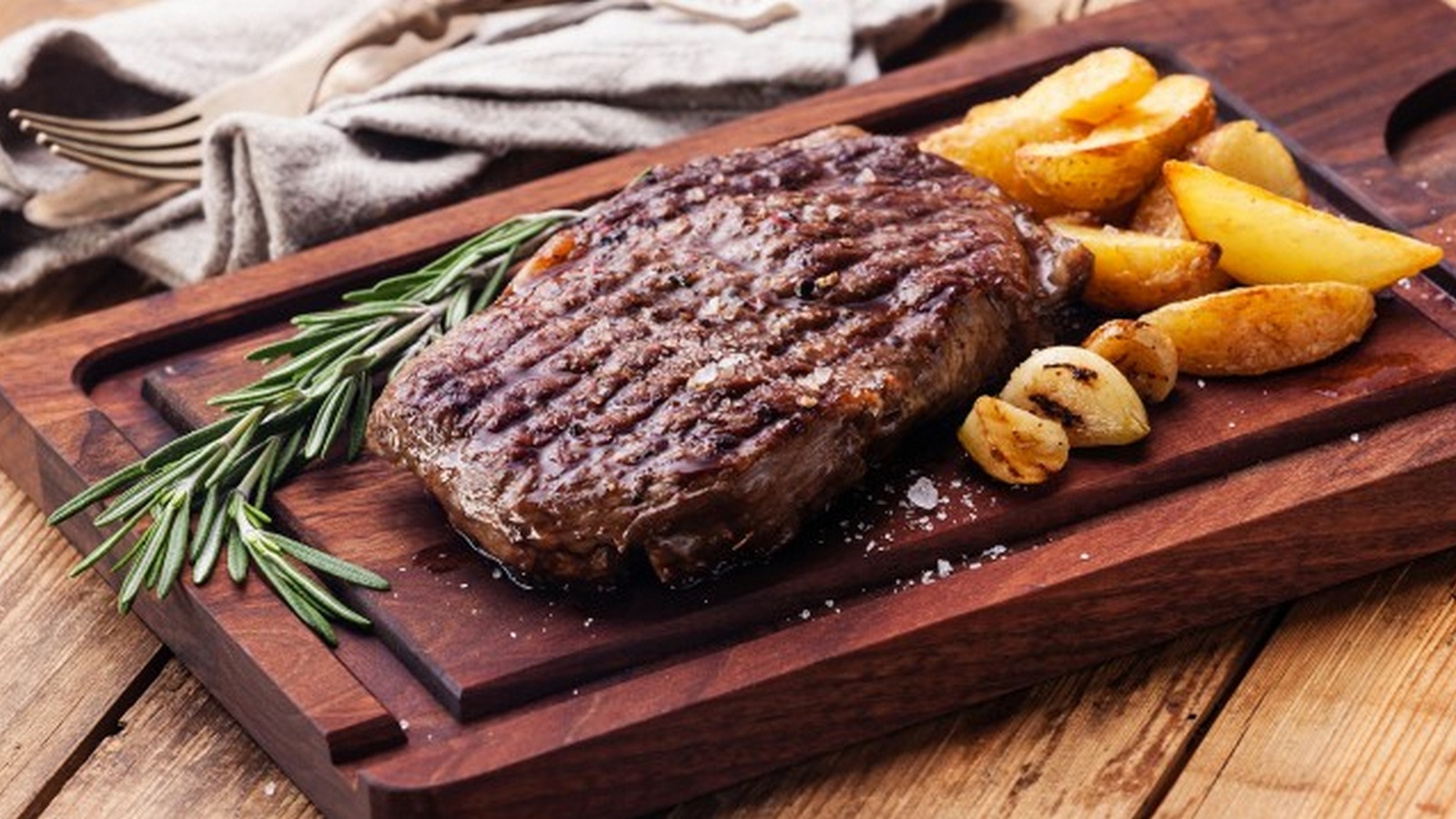
Steak… On the one hand, it’s a beautifully simple dish: meat, salt, a frying pan, or a barbecue. On the other, it comes with dozens of little nuances:
- How should you defrost the meat?
- How do you avoid overcooking or undercooking it?
- How should it be served?
- Do you use oil or fry it dry?
- How do you guarantee juiciness and flavour?
- And what about that perfect crust?
It’s an undeniable fact: 80% of a delicious, juicy steak comes down to
the quality of the meat. Unaged meat simply WON’T do — it’s really only fit for sausages and lacks any real depth of flavour or aroma. For steaks, you strictly need
wet-aged or dry-aged beef. That is the gold standard.
The good news: if you’ve already placed an order with Private Butcher, that 80% is securely in your hands. Now, the main thing is to cook it properly and not ruin a beautiful cut of beef. We’re here to help with that.
We’ve put together 9 essential rules for cooking the perfect steak, alongside a few tips from a renowned British chef. Let’s get started!
So, you have a high-quality cut of dry-aged or wet-aged beef… What next?
1. Defrost the meat properly — 10 to 12 hours in the fridge, then 30 minutes at room temperature Once you’ve taken the meat out of the freezer, pop it in the fridge for 10 to 12 hours. Leave it straight in its vacuum packaging.
DO NOT defrost a steak:
- Using hot water — this disrupts the molecular structure on the surface of the meat, ruining its flavour profile, and encourages bacterial growth.
- In the microwave — the meat can actually start to ‘cook’, leaving it tough and dry.
If dinner is in 2 to 3 hours and you’ve only just taken the steaks out of the freezer, there is a workaround. Place the meat (still in its vacuum packaging) in a bowl of ice-cold water for 2 hours. Change the water every 30 minutes to ensure it stays thoroughly chilled.
After this ‘ice-bath’ defrosting, or after taking it out of the fridge, remove the packaging, place the meat on a plate, and leave it at room temperature for 30 minutes. This is essential for the heat to distribute evenly during cooking, ensuring the meat stays beautifully tender.
NEVER refreeze the meat.
2. DO NOT rinse or wash the meat If you think you are simply ‘washing away’ bacteria — you aren’t.
In all likelihood, rinsing will only make things worse. Water doesn’t sterilise; rather, it accelerates the rate at which bacteria multiply. Washing also adds unwanted moisture to the meat, meaning it won’t sear properly when cooked.
Remember, all bacteria will be killed off during the cooking process.
Pat away any excess moisture with kitchen roll. Incidentally, the drier the surface of the meat, the better the crust.
3. There’s NO need to marinate steaks A classic steak is not a kebab! It DOES NOT require ‘tenderising’ or a heavy hand with spices. This is especially true for premium cuts (we’ll cover alternative steaks in another article).
Beef for steaks is a superb, self-contained product, designed specifically for you to simply defrost, salt, and fry.
4. A little olive oil, salt, and pepper before frying is plenty Before cooking, rub the steak with a spoonful of olive oil (even an inexpensive one will do), sprinkle with salt (coarse sea salt is best), and add a little black pepper. Do this on both sides.
Yes, you absolutely can — and should — salt the steak BEFORE cooking!
Be generous with your salt and pepper, as up to 35% of the seasoning is lost when transferring the steak to the pan or the barbecue. Don’t leave this mixture to ‘soak in’ (we aren't marinating, remember?) and get straight to cooking.
By the way, it’s worth looking out for smoked sea salt — it can elevate the flavour to a whole new level.
Gordon Ramsay is a British chef whose restaurants have been awarded 16 Michelin stars. We’ve put together a few of his tips on cooking steaks:
- If you’re using a frying pan, you’ll need one with a thick base (cast iron or steel is ideal) — this will help retain the heat well.
- Only turn the steak with kitchen tongs, NOT a fork. A fork can pierce the meat and ruin its integrity (and therefore its aroma and flavour).
- How can you tell if the meat is already medium rare if you don’t have a meat thermometer? It’s very simple. Place your thumb on your wrist, right where you check your pulse. Feel the texture of that area of your body. Well, the texture of a medium-rare steak is very similar.
- Don’t slice the cooked steak too thinly. The minimum thickness is 0.5cm. It’s precisely these slices that will help you appreciate the flavour and ‘fullness’.
- Enjoy your steaks in a pleasant atmosphere, with family or friends — it tastes even better that way!
We’d like to remind you that at “Private Butcher,” you can order the perfect meat for steaks—both wet-aged and dry-aged.
Here, you’ll find delicious artisanal meat — high-quality, free-range, raised almost entirely on grass, without any antibiotics, hormones, or food additives. We treat every animal with care and responsibility.