3 myths about the storage, packaging and delivery of artisanal meat
Olena is a mum of two. She’s used to buying meat at the supermarket, or sometimes at the market. Each time, it takes between 30 minutes and 2 hours.
She has to travel to the shop or market
Carefully check the meat’s ingredients — to make sure it doesn’t contain antibiotics or hormones
Check the use-by date, the appearance of the meat and its smell
Still worry about whether it’s good quality meat and whether it’s safe for her children to eat
Olena usually buys meat ‘for a single meal’: she cooks it straight away and doesn’t freeze it, because she’s heard that it’s harmful.
Recently, Olena decided to try craft meat in boxes and is worried that the meat might go off in transit, whether frozen meat is safe, and how long it keeps…
We’ve got the answers! We’re also debunking three myths about the storage, packaging and delivery of craft meat.
Vacuum-packed artisanal meat can be stored for up to 18 months
When you receive frozen, vacuum-packed meat, you might wonder: ‘How long will it keep?’
If it’s frozen, packaged and stored correctly — a long time. You definitely won’t have to worry about:
‘What if the meat goes off?’
Not having time to eat it all
Having to order ‘only what we’re sure to eat’ or ‘cook it all at once’
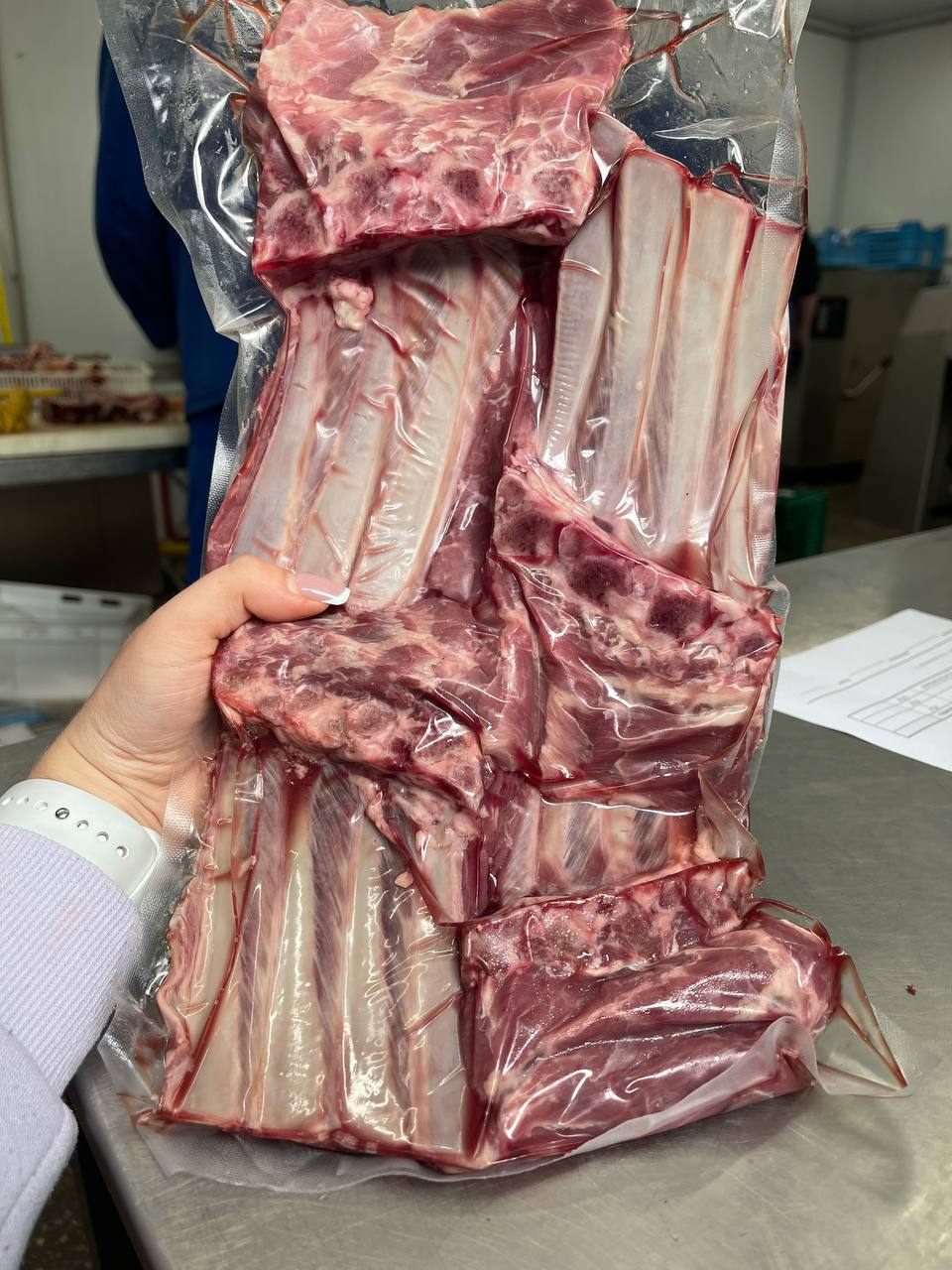
This is what vacuum-packed meat (lamb loin) from ‘Private Butcher’ looks like
Artisanal meat from ‘Private Butcher’ can be stored in the freezer for between 4 and 18 months, depending on the type of meat:
Meat;Shelf life in vacuum packaging
Beef;8 to 18 months
Poultry;5 to 12 months
Pork;4 to 12 months
Lamb; 6 to 12 months
You can take the meat out of the freezer at any time, defrost it and cook a delicious, juicy dinner.
Fancy a New York steak for dinner? Here you go. A whole chicken for friends or family? We’ve got that too. Beef patties for burgers? Just take them out of the freezer!
And the meat won’t lose any of its flavour or nutritional value in the process.
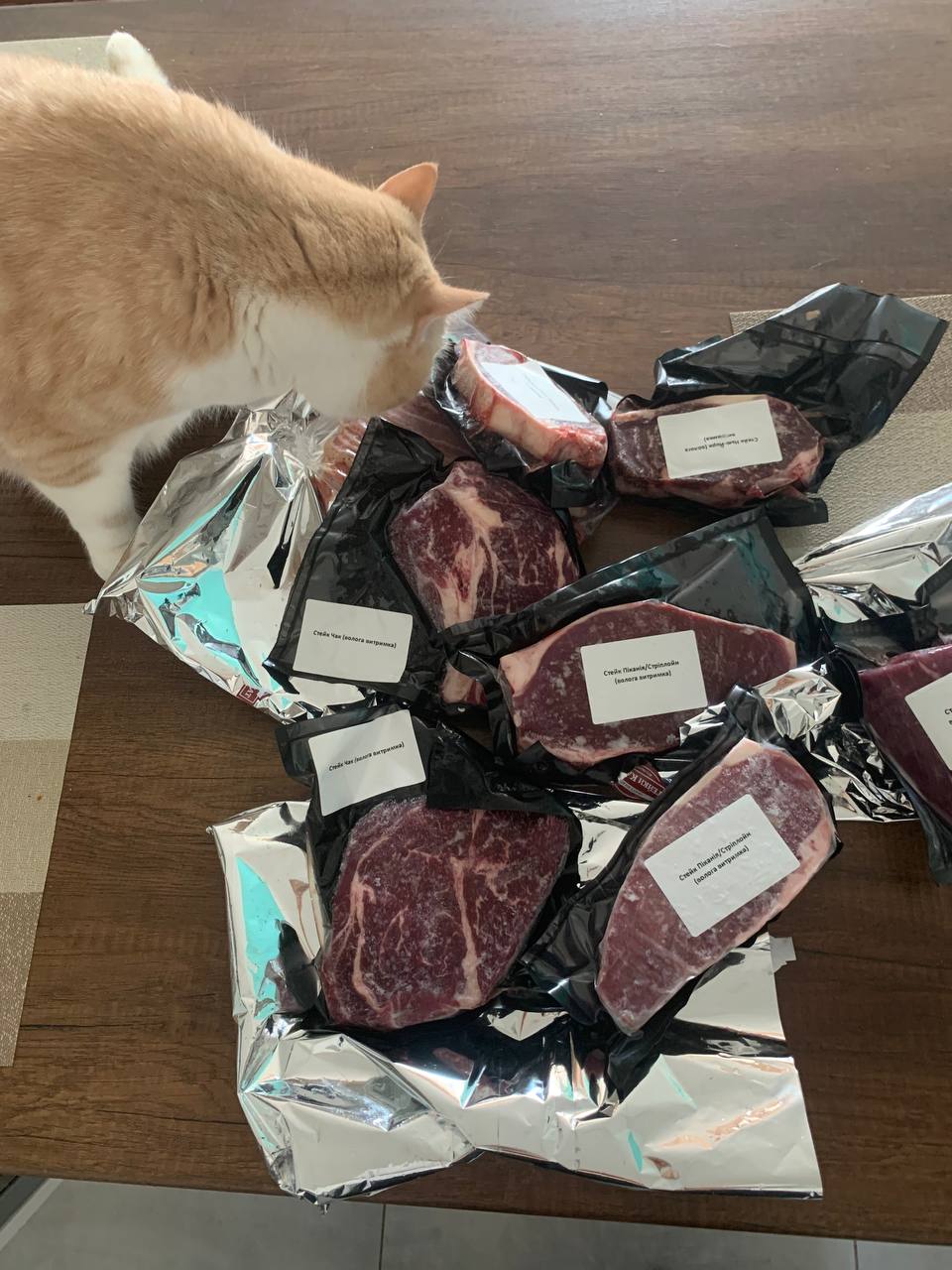
Unboxing a Private Butcher meat box from our customer, James Clark
Choose a meat box of artisanal meat — steaks, chicken, pork — via the link: Choose your meat
And now let’s talk about the myths.
Myth No. 1: Freezing meat is harmful
Fact: Correct(!) freezing does NOT compromise the quality, nutritional value or flavour of the meat.
Freezing food prevents the development of microbiological processes and drastically reduces the rate of enzymatic and physico-chemical reactions.
We freeze meat using flash-freezing technology and then vacuum-pack each piece.
Flash-freezing preserves the flavour, texture and nutritional value of the meat
Flash-freezing technology is a method of freezing meat using specialised equipment as quickly as possible at temperatures down to -40°C.
How does it work?
Every food product contains water molecules. When cooling takes place, these molecules turn into ice, which damages the tissue.
With conventional freezing, large ice crystals form, but with deep-freezing (flash-freezing), they are very small.
Microcrystalline ice does not destroy intracellular bonds, nor does it alter the volume or quality of the products.
A close correlation has been established between the freezing rate and the quality of food products.
Specifically, the faster the freezing process, the faster all liquids (‘water’) turn into ice. The smaller the ice crystals, the more intact the structure of the product’s tissues and the better the enzyme composition.
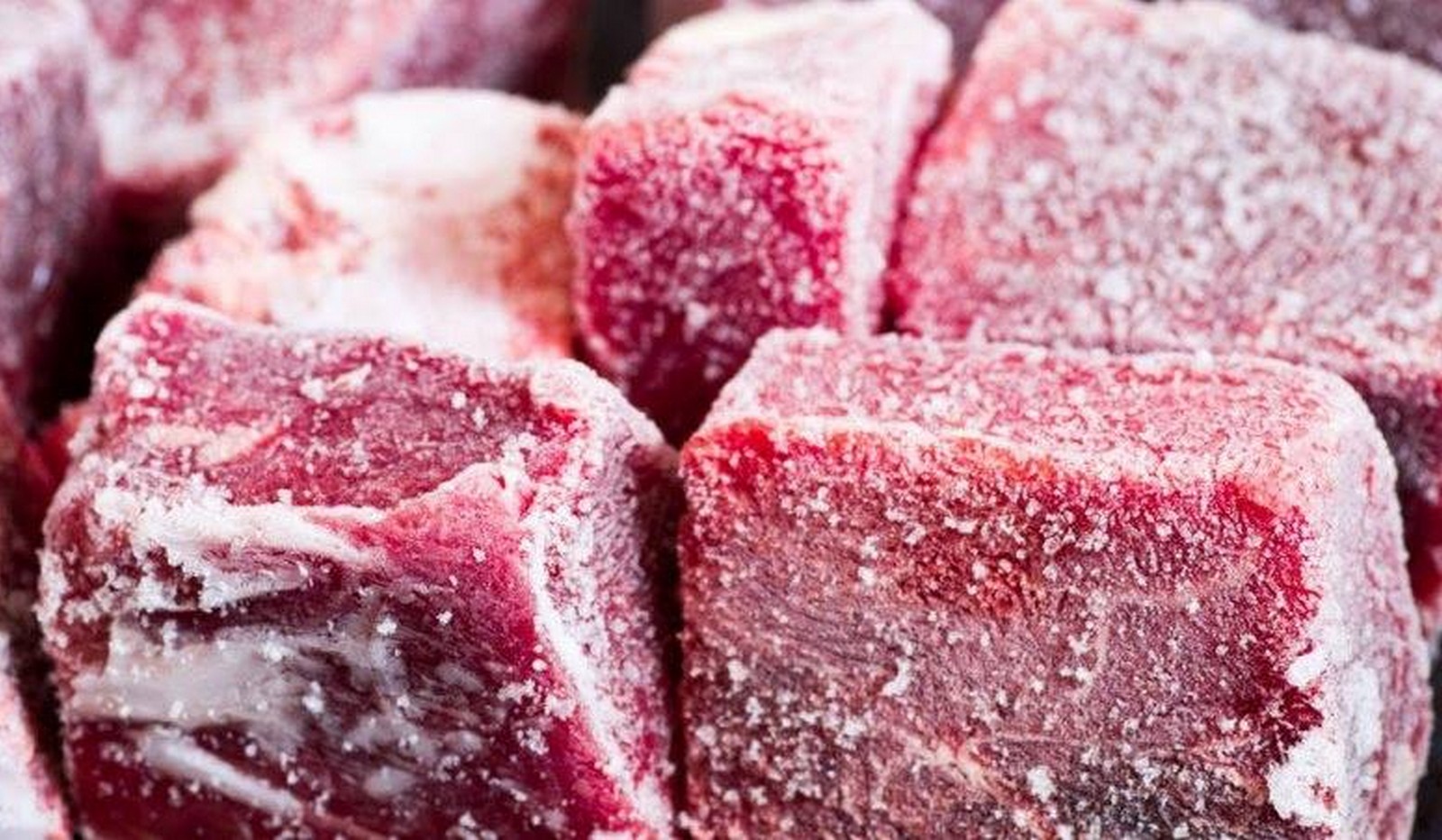
Meat frozen using the flash-freezing method
The temperature is lowered in stages by blowing a powerful stream of chilled air over the product.
The main advantage of flash-freezing over conventional freezing is that it preserves the flavour, texture and nutritional value of the products.
Flash freezing;Conventional freezing
The freezing process takes 25-30 minutes;The freezing process takes up to 4 hours
Products retain their biological composition, including vitamin content, and their nutritional value;Products lose vitamins and nutrients
No bacteria remain at all (bacterial purity);Bacteria remain, which can subsequently multiply
The structure of the products is preserved;Fibres are destroyed, and the structure changes
The mass of the products is preserved — loss of up to 0.8%;Product mass loss of up to 5-10%
After flash-freezing, the meat is stored in special commercial refrigerators.
A photo review from a Private Butcher customer — you can see that the meat is still frozen
Important: if you have already defrosted the meat, do NOT refreeze it.
This will result in a loss of nutritional value, and bacteria may develop in the meat.
What’s more, you’ll most likely be freezing the meat in a standard freezer rather than using a blast-freezing method. This will slow down the freezing process even further — and consequently slow down the growth of bacteria, as well as causing damage to the meat’s structure, quality and flavour.
Vacuum packaging helps keep meat just as nutritious and juicy for twice as long
Vacuum packing after flash-freezing — improves the quality and extends the shelf life of meat even further:
Preserves freshness by removing air
Blocks out external odours
Retains juiciness
Prevents drying out
Reduces the risk of contamination during transport
Doubles the shelf life
The meat is placed in a vacuum bag, from which all the air is extracted; the bag is airtight and fits snugly around the meat.
If the vacuum-packed product is stored in the freezer, its nutritional properties and structure will remain intact for a long time.
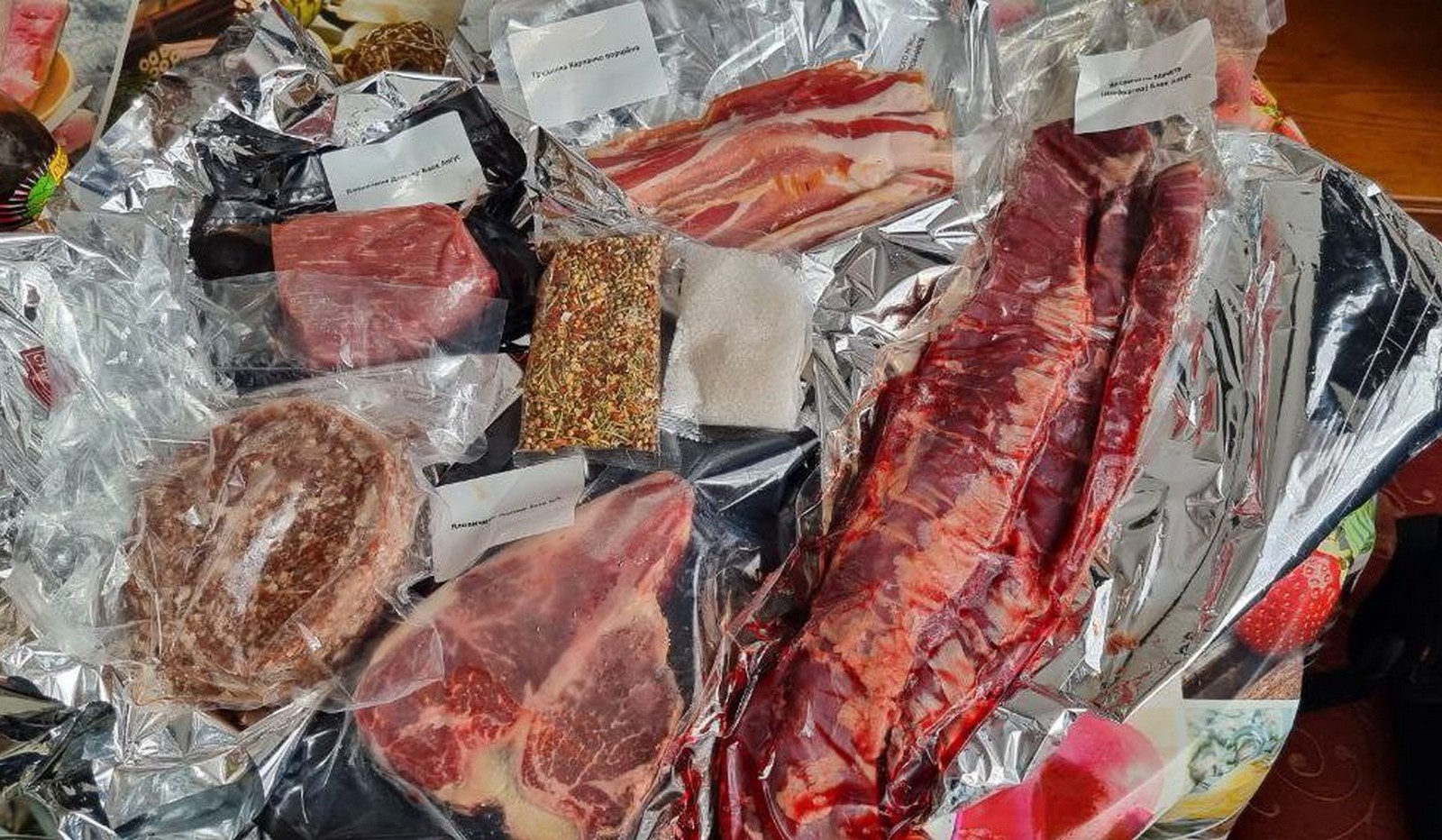
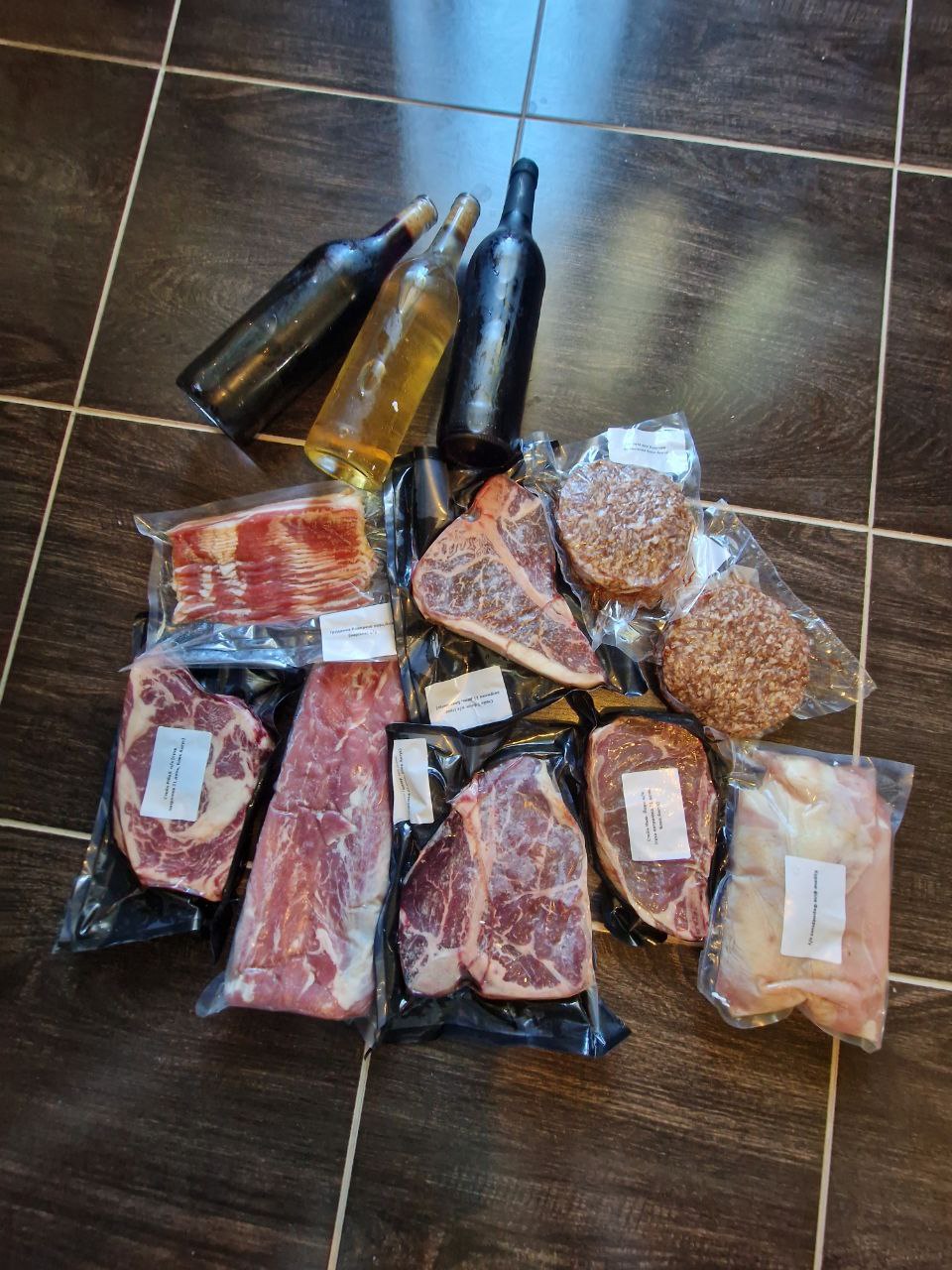
A photo review from a Private Butcher customer, Richard — vacuum-packed New York steaks, striploin steak, organic chicken, bacon, and burger patties
Choose artisan beef steaks, organic pork and chicken that can be stored for over 12 months: Choose steaks
Myth No. 2: Steak meat can easily go off
Fact: Steak meat that has been properly frozen and packaged is very difficult to spoil.
When we talk about ‘spoilt’ meat, we often mean fresh (chilled) meat. This is how it is for the first 2–4 hours after slaughter. This is stage 1.
The meat then goes through two further stages:
Stiffening (24–48 hours)
Maturation (14–40 days)
There are two types of maturation:
1. Dry The meat is kept for 21–40 days in special chambers with a controlled temperature of 2–3°C, humidity of 60–75 per cent, and a constant air flow of 0.5–2 m/s (dry maturation)
2. Wet The meat is kept in a vacuum for 14–21 days, WITHOUT access to oxygen, at a temperature of 2–4°C.
The meat is then cut, frozen and packaged.
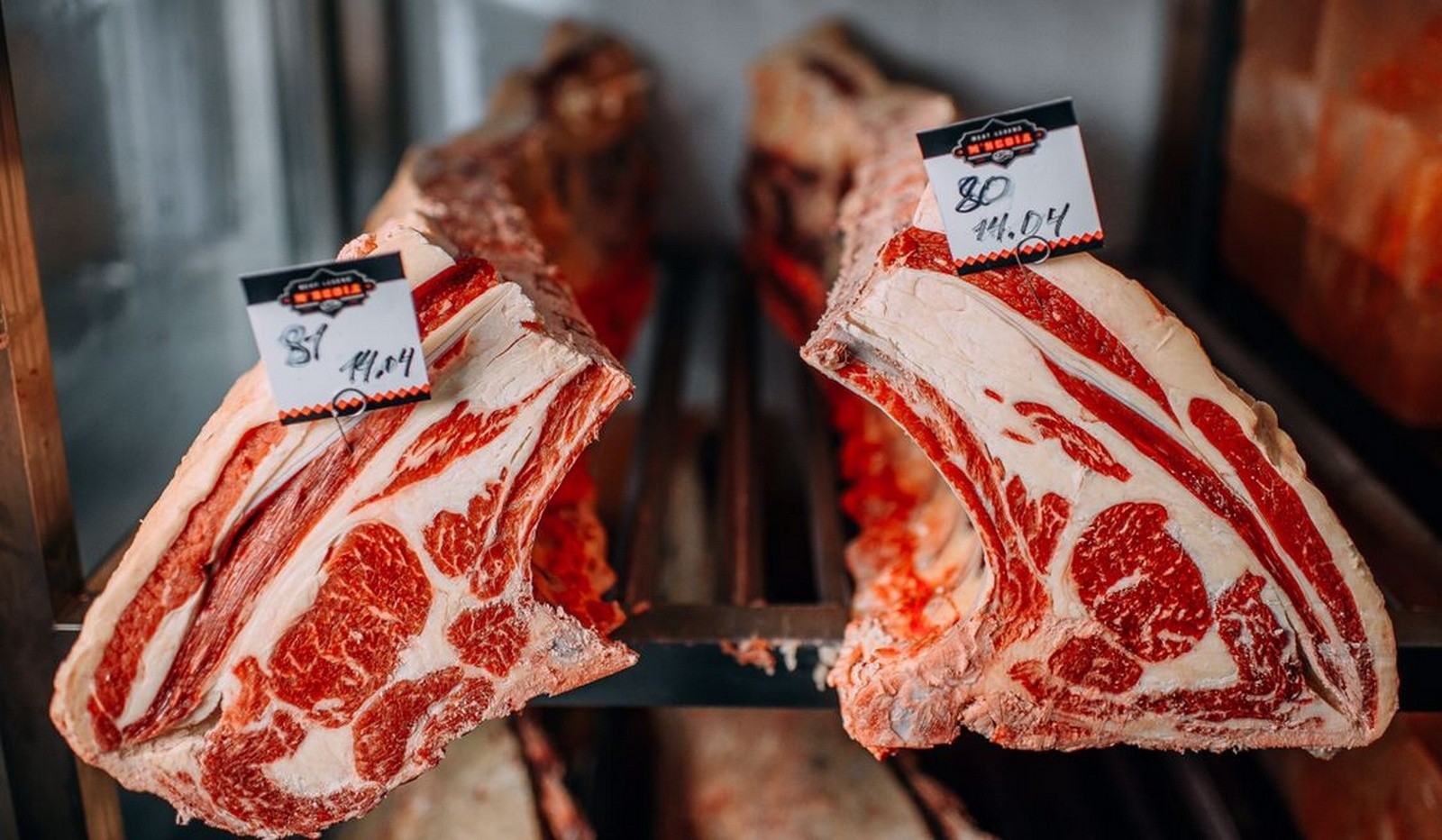
The dry-ageing process at Private Butcher
So you can be sure you’ll receive high-quality, healthy meat that will reach your table intact and unspoilt.
In the US, steaks have been delivered by post since 1953! We’ve adopted this tried-and-tested method to ensure you receive fresh meat at home, saving you time.
Immediately after processing, the meat is vacuum-sealed, frozen using a gentle quick-freezing technique and stored in special professional freezers.
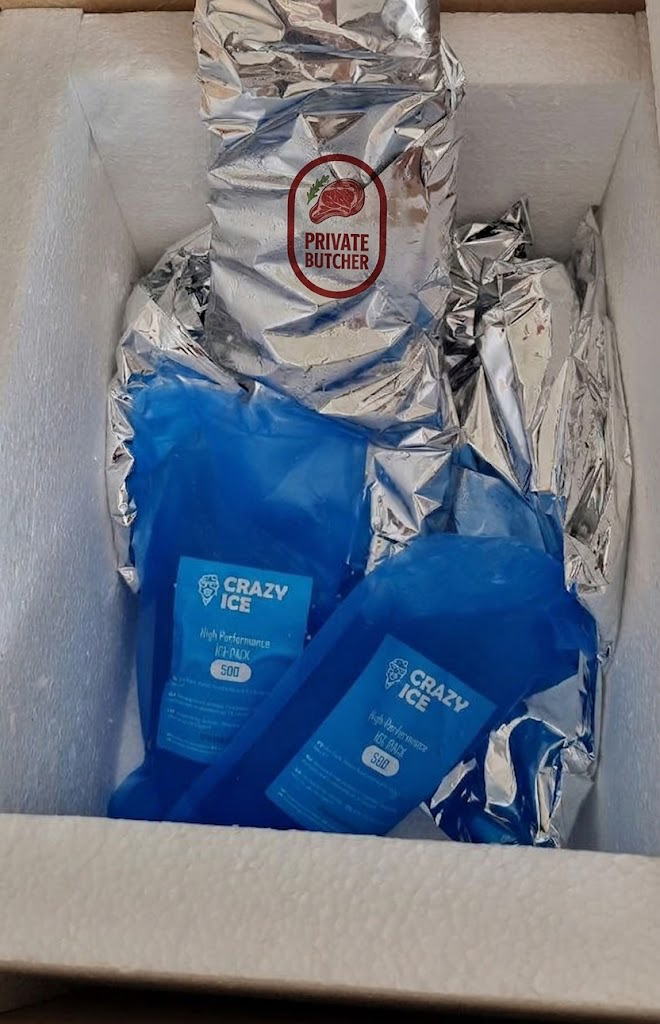
Once you have placed your order, the selected cut is packed into special boxes containing ice packs and dry ice.
Photo review from Private Butcher customer Arthur — meat packaging in thermal bags, along with ice and in a special box.
We deliver by post across the UK within 2–3 days.
The meat arrives frozen. You can put it straight into the freezer without worrying that ‘something has gone off’.
How to enjoy delicious meat several times a week without having to go to the shop
When you order a meat box from ‘Private Butcher’, you’re instantly providing yourself and your family with healthy and delicious meat for a week or a month.
You can open the freezer any day, take out and defrost whatever you fancy today:
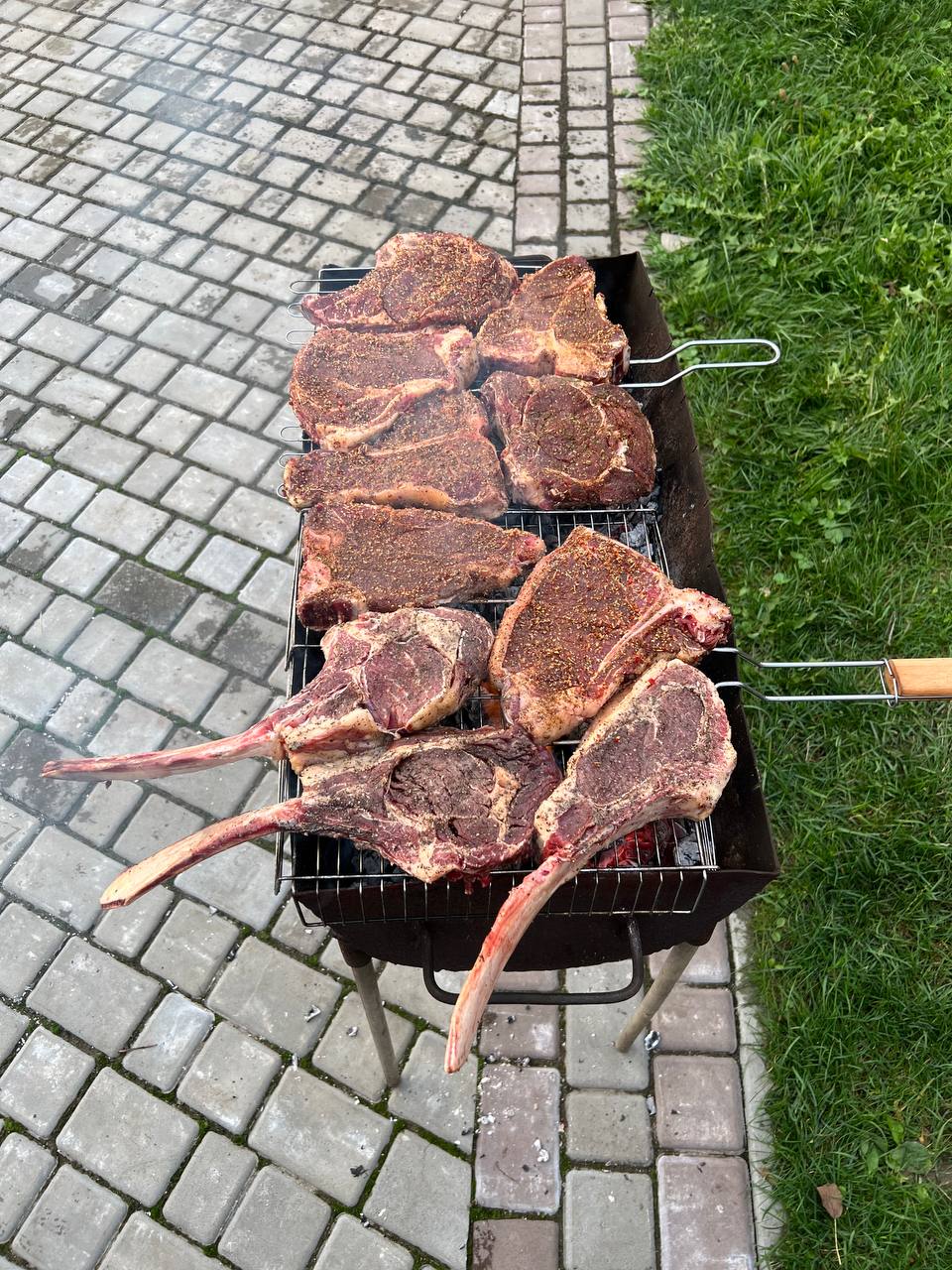
Classic steaks — ribeye, New York strip, fillet mignon, T-bone