Can you freeze meat? Busting the myths with cold, hard facts and why the best steaks are flash-frozen
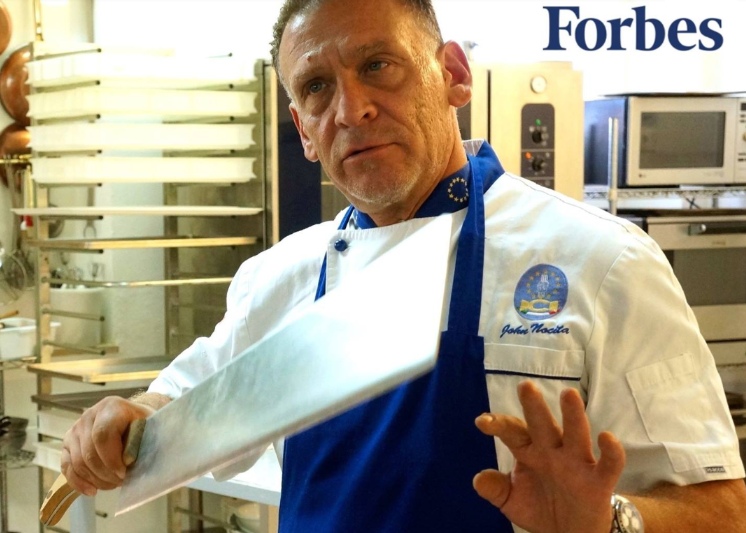
‘In Italy, there’s a law that requires us chefs to flash-freeze meat and fish. And that’s the right thing to do. Because when we buy fresh meat or fish at the market, it’s not actually that fresh anymore…’
—John Nocita, Chef and President of the Italian Culinary Institute (Italy), in an interview with Restaurateur magazine.
If you love meat, get ready! Today is the moment of truth for meat-eaters, because once you’ve read this article, you’ll find out:
can you freeze meat?
what is flash freezing and how does it differ from standard freezing?
how does proper freezing actually affect the flavour of your favourite meat products?
Can you freeze meat?
If you don’t own a farm (or at least live next door to one) and buy meat that has travelled a certain distance to reach the shops, then the answer is YES – go for frozen meat!
But, as they say, the devil is in the detail, so the meat needs to be frozen correctly – using the shock-freezing method. This is a special process of accelerated freezing that is far superior to standard domestic methods.
Let’s take a closer look.
What is flash freezing?
Flash freezing is an accelerated freezing process that is 3 to 10 times faster than standard methods. The cooling rate is adjusted depending on the type of product.
Simply put, it is an ultra-fast freezing technique that perfectly preserves nutrients, texture, and flavour.
Fun fact: The idea of ultra-fast food freezing belongs to Northern Native Americans. Freshly caught fish was placed in an icy pool and then frozen in strong winds. This ensured a higher quality of both the frozen and cooked fish.
As a result of an optimally calibrated shock freezing process, meat products do not lose their rich flavour; they remain firm and succulent, and retain their volume during cooking.
‘But where are the facts?’ you might ask. And we agree, so let us briefly delve into the world of molecular chemistry.
What actually happens to the meat?
According to Van ’t Hoff’s rule — who, incidentally, was a Nobel laureate in Chemistry — the rate of chemical reactions slows down as the temperature decreases.
Simply put, the faster the cooling process, the slower the degradation of the substance. This is the fundamental difference between flash freezing and slow freezing. It is precisely this feature that preserves the nutritional value and flavour of the products.
Furthermore, with shock freezing, the process of active sublimation (dehydration) begins significantly later — at the 6-month mark at the earliest. This extends the product's shelf life up to 18 months, without any loss of succulence or softening of its structure.
At the molecular level, the rapid method works as follows: the ice within the fibre structure is very small, less than 50 microns (compared to 180 microns or more in the slow method), and therefore the tiny ice crystals do not grow together to form larger ones.
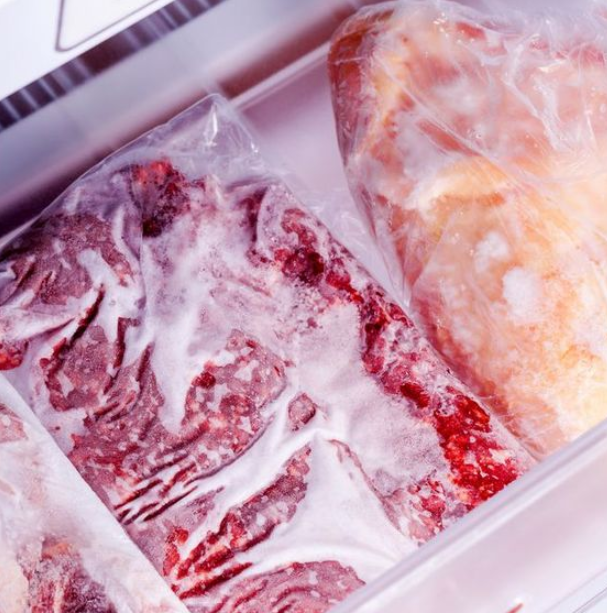
With slow freezing, on the other hand, the microcrystals begin to coalesce into larger ones right from the start of the freezing process, destroying the cell walls, and so dehydration begins immediately.
In addition, the fats undergo oxidation and rancidity.
Let’s not go into too much detail on this topic; the main thing for us is that this method of heat treatment, more than any other, is ideal for preserving the qualities of craft meat.
So, rapid freezing helps to preserve the texture, flavour and juiciness of food, as well as extending its shelf life. But the benefits don’t stop there.
Incidentally, low temperatures inhibit microflora: sarcocysts, Neospora, Toxoplasma and other parasitic microorganisms cannot tolerate harsh, almost polar conditions.
Consequently, meat that has undergone shock freezing is safer than meat that has simply been chilled or frozen using standard methods.
Freezing myths: busted
Like many modern food preservation technologies, flash-freezing is surrounded by a whole host of myths and outright fabrications. We therefore feel it is necessary to debunk the most common of these.
Myth 1: All nutrients are ‘destroyed’ during freezing.
Reality: During both flash-freezing and slow freezing, the vitamin C content does indeed decrease, by approximately 15 per cent, which, in the case of meat, is a negligible loss.
Nutritionists state that poultry and meat products should not be regarded as a source of this vitamin. To replenish your ascorbic acid reserves, you need to eat fresh fruit and vegetables.
At the same time, the mass fractions of protein, fat and moisture, as well as the pH level, remain virtually unchanged throughout the entire storage period.
According to research, by the seventh day of freezing, the content of fat-soluble vitamins is similar to that of frozen meat after a whole year of storage!
Myth 2: Frozen meat works out more expensive than a fresh cut.
Reality: Yes, such a product can end up costing more when dealing with slow freezing and an unscrupulous producer. But with shock freezing, this is simply impossible.
With shock freezing, the total weight loss after defrosting is a mere 0.8% maximum, which is negligible compared to slow freezing, where the product can lose up to 10% of its weight due to sublimation.
Moreover, some dishonest producers — and occasionally even large companies — artificially inflate the weight by pumping the meat with liquid before freezing. Consequently, once defrosted, the price per net weight naturally skyrockets.
This practice is deceptive and negatively affects the flavour profile of the product. Therefore, we never do this, and we strongly advise against it (feel free to weigh our steaks AFTER defrosting).
‘Private Butcher’ meat first undergoes dry or wet ageing, is then shock-frozen, and finally vacuum-packed. Everything is honest and transparent — in both the literal and figurative sense of the word.
Myth 3: Meat loses its flavour after defrosting.
Reality: If you defrost meat and poultry correctly, without using harsh methods, these products are every bit as good as fresh ones. Flavour, aroma, texture and juiciness — all these characteristics remain excellent.
It would take a long time to debunk this myth, but the best way is to try artisanal farm meat from organic farms and draw your own conclusions.
What is special about freezing meat at ‘Private Butcher’?
Previously, some 20 years ago, it was thought that the faster the freezing process, the better the quality, as the ice crystals were smaller. Experts have now come to a different conclusion.
There is an optimal speed and a series of stages for flash-freezing, which vary for each product. When it comes to farm-raised meat, the freezing process is as follows:
A preliminary stage, during which the product is cooled to 0°C.
Pre-freezing, lowering the temperature to -5°C. This step allows up to 70 per cent of the liquid substances to be converted into microcrystals.
Final freezing, during which different cuts of meat are brought to a temperature of -24 to -40 °C using forced-air cooling.
It is precisely this rapid yet phased process that allows us to preserve all the flavour characteristics and texture of our meat products to the greatest possible extent.
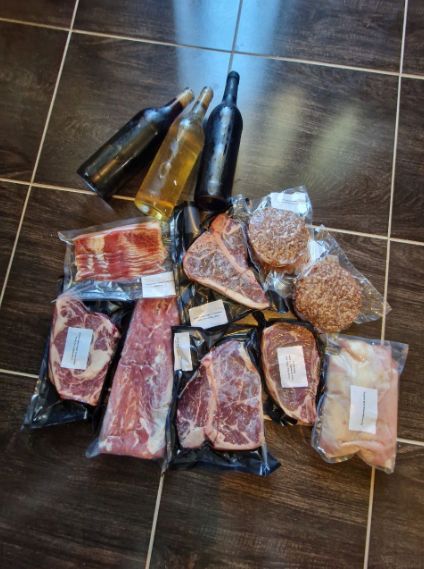
This is how we prepare all varieties of meat products from our range for dispatch:
To order these and other meat products, please visit our website.
The correct way to store your ‘Private Butcher’ meat
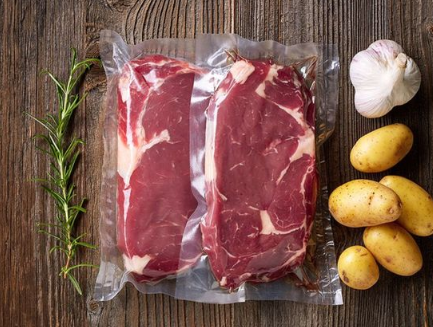
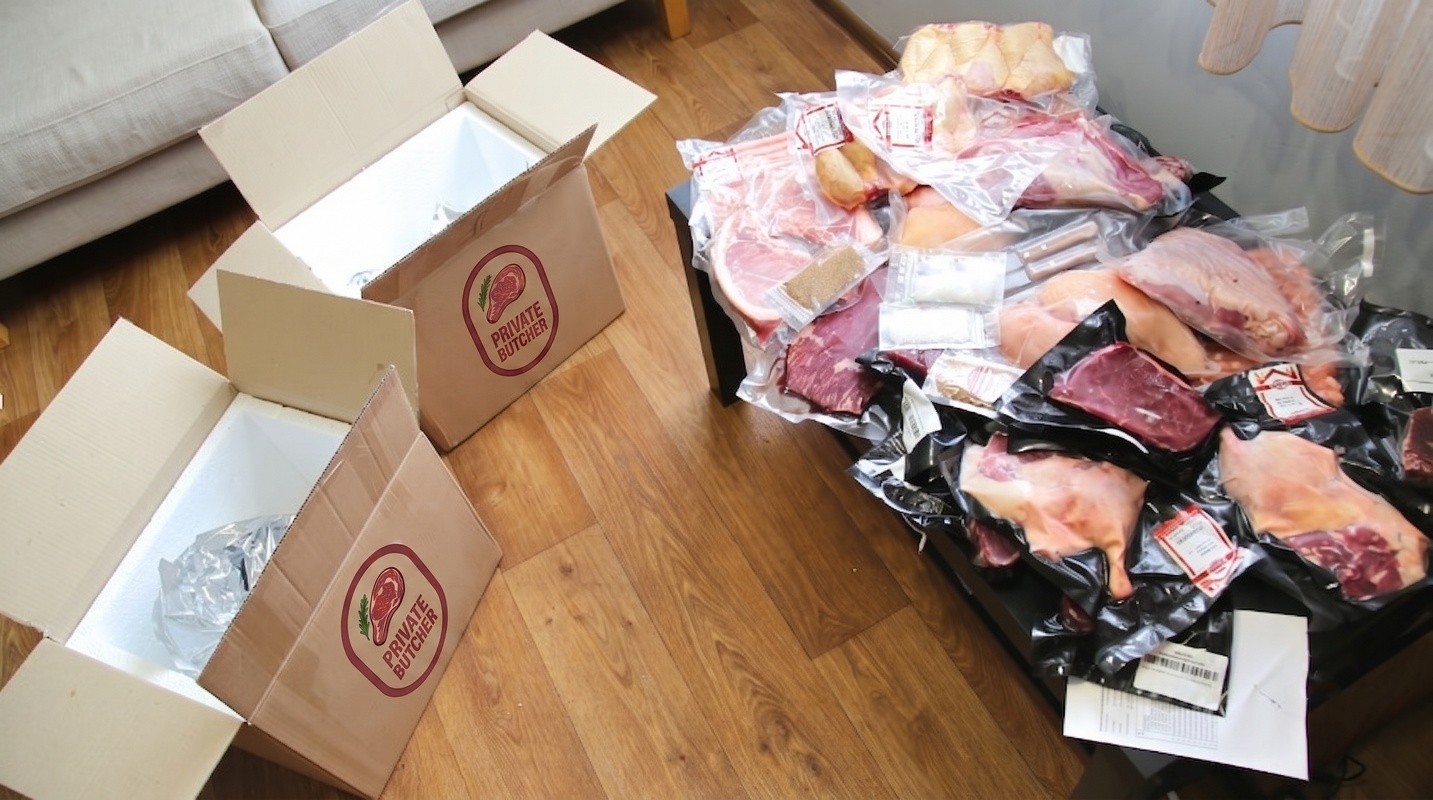
We deliver all our products in insulated packaging, so there’s no need to worry about the meat defrosting in transit. What’s more, each product is individually sealed in sturdy vacuum packaging.
Vacuum packaging offers additional benefits:
the meat is not exposed to air;
the cuts are protected from any contamination and harmful bacteria;
the meat retains its juiciness;
the product does not absorb odours from other items in the freezer
Meat products should be stored in the freezer for between 4 and 18 months, depending on the type of meat. The vacuum seal should only be removed just before cooking.
Meat;Shelf life in vacuum packaging
Meat;8 to 18 months
Poultry;5 to 12 months
Pork;4 to 12 months
Lamb; 6 to 12 months
But beyond just storage, it is crucial to know the correct methods for defrosting. Otherwise, the product's flavour and texture could be severely compromised.
8 Secrets for the Perfect Defrost
The success of a dish depends on how properly the cut of meat has been defrosted. That’s why we’re sharing our 8 rules for defrosting meat correctly:
Defrost naturally only. 12 hours before cooking, move the meat from the freezer to the bottom shelf of the fridge. This will allow the cut to defrost gently without distorting its structure.
Before cooking, open the vacuum-sealed packaging and let the meat ‘breathe’. Leave it at room temperature for 1–1.5 hours, depending on the size of the cut.
Do not use quick defrosting methods: do not place the meat under hot water, and do not defrost it in the microwave or oven. All these methods spoil the flavour and damage the muscle fibres.
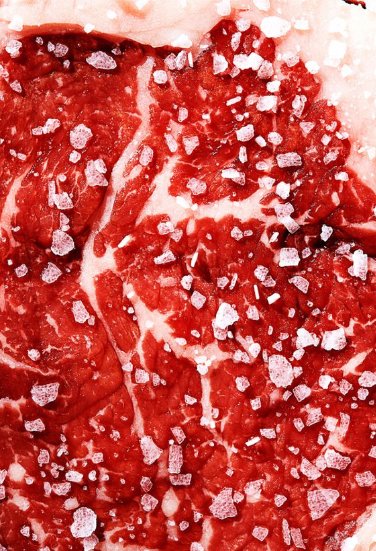
Heaven forbid you coat a frozen fillet with vinegar or rub it with salt to defrost it! Yet, these are exactly the sort of 'tips' we stumbled upon on forums whilst writing this article. This completely destroys the flavour of any product.
Do not use marinades for defrosting. Salt and spices will damage the surface without penetrating the inside. The result is meat that is oversalted on the outside and bland on the inside.
Marinades and spices should only be used once the cut is fully defrosted. To check, press your fingers into the thickest part of the cut: if it’s soft, you can start marinating.
Do not defrost at room temperature. The ideal temperature is up to +4°C, so the bottom shelf of the fridge is best. Otherwise, the top part will soften too quickly, whilst the inside will remain tougher.
Do not refreeze. No food should be refrozen, and this is particularly true of meat. This is especially the case if you are using a standard domestic freezer rather than a professional blast freezer.
TIP: If you really can’t spare the time to wait, you could try the following method, shared by Private Butcher customers 👇
Place the sealed, vacuum-packed frozen steak into a bowl, pop it in the sink, and leave it under a gentle trickle of the coldest running water possible. This way, you can safely defrost the meat in about an hour.
This trick has been an absolute lifesaver for many a host when guests drop by unexpectedly) Give it a go and see for yourself.
How we deliver frozen meat
Even now, many Europeans are surprised by the possibility of sending food parcels. But in reality, there is nothing complicated, expensive or troublesome about it.
An interesting fact: frozen meat delivery has been practised in the US since 1952! And this is in a vast country covering 9.5 million square kilometres—enormous when compared to the UK. As a reminder, the total area of the UK is only about 244,000 square kilometres.
To preserve the product, which has been pre-packed in vacuum packaging, we use:
a special insulated box;
a foil thermal pack;
separately packed ice.
Delivery usually takes 1–2 days, depending on the customer’s region. The meat does not thaw during transit, so you will receive it exactly as it was when it left our premises.
The cost of delivery to a post office branch varies by city. Our manager will be happy to provide a more detailed quote.
You can collect the meat from a post office or have it delivered to your home; a courier will bring your order right to your door.
We also offer partnerships to restaurants, steak houses and other establishments wishing to add farm-raised meat and barbecue products to their menus.
Where to buy high-quality flash-frozen meat
Naturally, the paramount factor for any product undergoing shock freezing is the quality of the raw meat. This is why it is essential to choose only responsible producers.
We are not claiming that 'Private Butcher' meat is the absolute best; we are simply presenting the case for the high quality of our products:
The livestock is free-range, grazing on grassy pastures, and is thus reared in exceptionally natural conditions.
All our livestock and poultry are kept on small, artisan farms. Consequently, they receive better care and much more attention than they would on vast industrial factory farms.
Our farmers do not use antibiotics, harmful food additives, hormones, or genetically modified (GM) feed.
We strictly control the quality of the raw product and every stage of production: processing, ageing, freezing, vacuum packing, and storage.
Try artisan meat from ‘Private Butcher’! Your thermal box will arrive within 1 to 2 days, so we highly recommend selecting a mouth-watering steak or a tender fillet right now to experience all the benefits of shock-f‘rozen artisan meat.