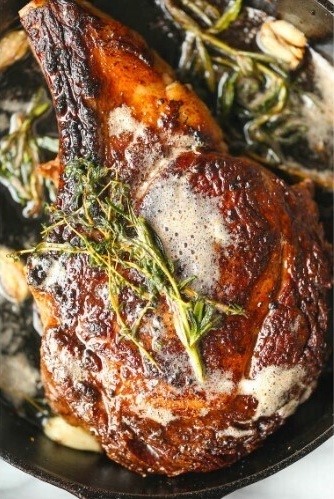
What is a Ribeye steak: the world’s most famous cut of meat and everything brits need to know
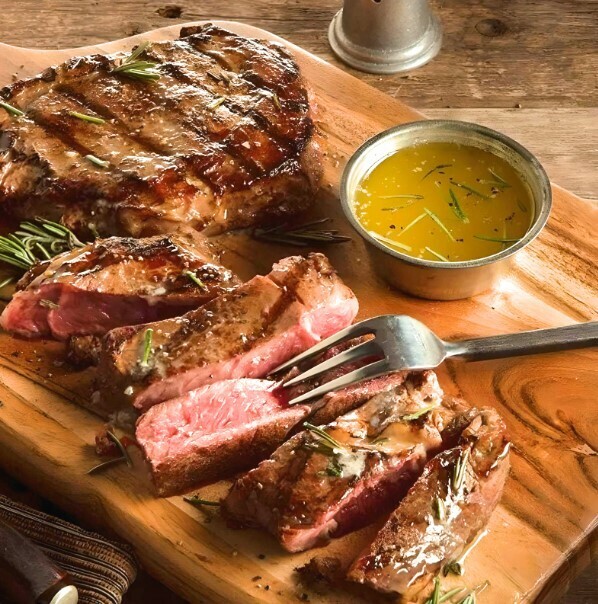
Behold — His Majesty, the Ribeye steak.
This is a steak you have, in all likelihood, heard of on more than one occasion. A classic among fine meat dishes and a firm favourite for gatherings with friends.
The Ribeye commands the top spots in steakhouses all over the world. It is the most tender of meats: succulent, with seams of fat and a high degree of marbling. Once you have tasted it, it is hard to forget and impossible not to crave more.
Trying a Ribeye is the sacred duty of every true meat connoisseur.
Ribeye steak — an exquisite meat classic.
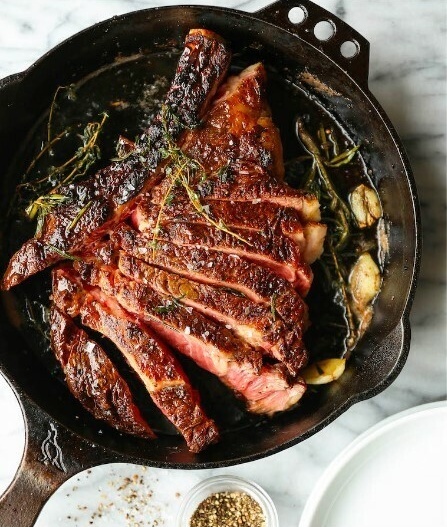
Ribeye. World-renowned and exceptionally marbled.
The ribeye steak is arguably the most famous steak in the world. Its history dates back to medieval Britain. But more on that later.
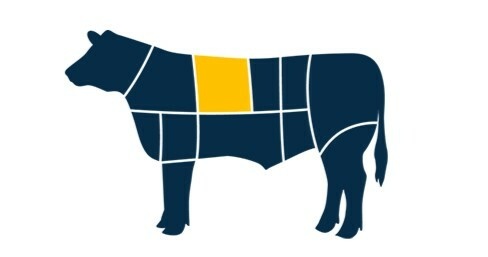
The ribeye is a classic steak. It is a cut from the rear of the carcass, specifically between the 6th and 12th ribs. The cut is situated at the junction of six muscles which the animal uses the least when moving throughout its life, which is why the meat is very tender and juicy.
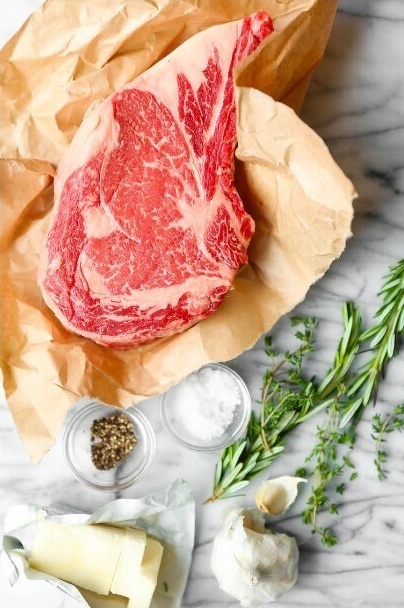
A rib runs through the centre of the cut, adding flavour and juiciness to the steak. It has a high level of marbling and fat streaks.
A Ribeye steak is cut from the rib section, between the 6th and 12th ribs.
The name is derived from the word ‘rib’. In the professional terminology of the Western butchery trade, the 'eye' refers to a cut of meat that has been separated from the bone.
In the US, a Ribeye is typically a boneless cut, alternatively known as a Spencer steak. If a Ribeye is left on the bone, it is referred to as a bone-in ribeye or a cowboy steak.
In Australia, a boneless Ribeye is called a scotch fillet. In France, it is an entrecôte.
And now, for a little history.
In medieval Britain, steaks were prepared from beef that was accessible only to the nobility and the wealthy. Over time, beef became more widely available to other social classes, and by the 18th and 19th centuries, the Ribeye had become a popular dish.
During this period, high standards for meat were established, involving the inspection and grading of every cut. The Ribeye subsequently made its way across the Atlantic, becoming an integral part of American cuisine. The American Ribeye is widely considered the benchmark for the tenderness and succulence of marbled beef.
A classic Ribeye is traditionally prepared from heavily marbled beef sourced from dedicated beef cattle breeds — exactly the kind you will find at the 'Private Butcher' online craft meat market.
What to look for when choosing a Ribeye: thickness, meat colour, and ageing.
When choosing a ribeye steak, it is important to pay attention to:
Colour: the meat should be a rich red, not brown or greyish-red
Thickness: the classic thickness of a ribeye is between 2 and 5 cm
Ageing: traditionally, wet-aged for boneless ribeye and dry-aged for bone-in ribeye
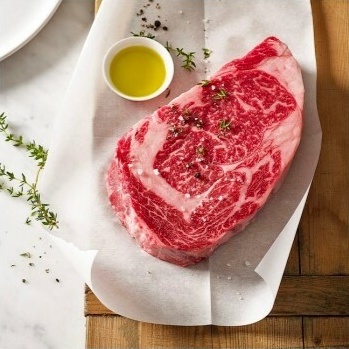
Marbling: the fat marbling should be evenly distributed throughout the meat
Aroma: milky and nutty for dry-aged, with citrus notes for wet-aged (though none of these are particularly pronounced)
Look for an even distribution of marbling and the colour of the meat when choosing.
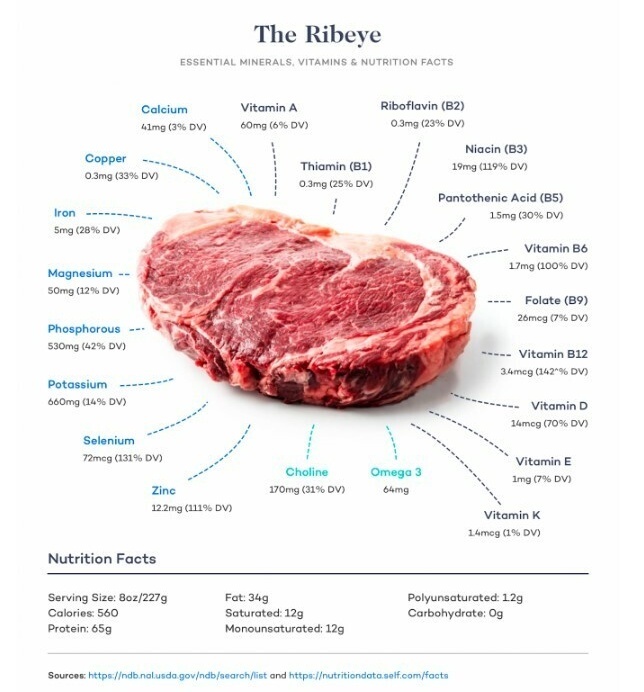
Ribeye steak — a source of vitamins A, B complex, D, E and K, calcium, omega-3, magnesium and iron
Ribeye contains all seven essential amino acids that the body needs.
Furthermore, research suggests that cutting out fatty meats, such as ribeye steak, and replacing them with lean protein, such as chicken, may increase the risk of developing certain types of cancer.
This is likely due to the loss of fat-soluble vitamin K2, which plays an important role in removing calcium from the arteries and activating the immune-boosting properties of vitamin D.
The high fat content in ribeye steak also makes it very filling. This means you feel full more quickly and stay full for longer. Consequently, you’re less likely to snack on crisps, chocolate or a sandwich.
Ribeye steak also contains conjugated linoleic acid (CLA) — a healthy fat that
has anti-cancer properties. For example, in a Finnish study, women with adequate levels of CLA had a 60% lower incidence of breast cancer.
It has a powerful anti-inflammatory effect on the body (inflammation is the number one cause of 70% of chronic diseases)
❗️Ribeye from animals reared on pasture and grass-fed contains 300–500 per cent more CLA than that from grain-fed animals.
Ribeye is a classic steak. It comes from a tender cut, so it does NOT need any extra marinade.
This is one of the little tricks that makes cooking a ribeye steak so easy and accessible to everyone. Even if you’ve never cooked meat before, you needn’t worry about ruining it.
So, the verdict: we recommend not marinating ribeye.
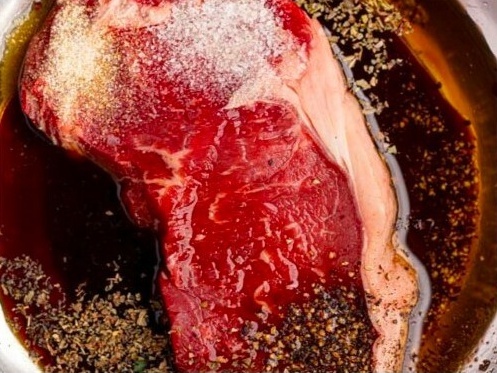
But if you do want to marinate your ribeye, you can choose very ‘light’ ingredients for this: olive oil, citrus juice, garlic (dried is fine), herbs and dried spices (to your taste).
Marinate for 15–40 minutes; this will be more than enough for a delicious and tender ribeye.
If you choose to marinate a Ribeye steak, 15 to 40 minutes is plenty of time.
Pan-fried Ribeye steak recipe: when there’s no need to visit a steakhouse
You don’t have to go to an expensive steakhouse in the centre of New York to enjoy the perfect steak…
You can cook the perfect steak right at home, so that you’ll find yourself saying ‘mm-mm’ with delight with every bite. Especially if it’s a ribeye steak. Difficulty level: easy!
Here’s a simple recipe
Even a complete beginner can cook a Ribeye steak.
You will need:
Ribeye steak, 2+ cm thick (order the best boneless cut here, and the bone-in version — here)
Prepare the meat — remove it from the fridge 30 minutes before cooking. Pat dry with kitchen paper to remove any excess moisture.
Rub the steak with salt (¼ tsp) and black pepper (½ tsp). You can also rub it with a little olive oil.
Heat a frying pan over a medium heat until smoking hot. This takes approximately 1–2 minutes. Add the oil — rapeseed or olive.
❗️ You can fry a ribeye steak without any oil at all — in fact, that’s a good thing, as the steak releases its own fat.
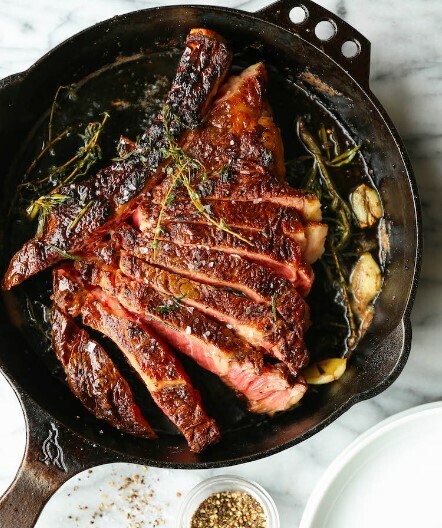
Place the steak in the centre of the frying pan and fry it for 2–3 minutes on each side, turning it over.
Reduce the heat to medium, and move the steak from the centre of the pan to one side. Meanwhile, add the butter, crushed garlic cloves, thyme and rosemary to the pan.
Fry until the fat becomes frothy — about 30–60 seconds.
Check the steak with a meat thermometer, if you have one. The ideal doneness for a ribeye is Medium (58–62°C) or Medium Well (63–69°C).
Wrap the steak in foil for 10–15 minutes and leave it to rest. The meat needs time to ‘settle’.
Serve.
❗️It tastes better with a side dish 😉. Below are a few tasty and simple options.
Allow the Ribeye to rest for 10–15 minutes after cooking to let the juices settle.
Side dishes to go with a ribeye steak: asparagus, roast potatoes, Brussels sprouts
Serve your ribeye steak with a side dish — it tastes better that way. Choose from:
Asparagus with olive oil and garlic (sauté for 15 minutes until tender)
Crispy roast potatoes (well, of course!)
A bowl of salad — the more varied the greens (rocket, spinach, microgreens, lettuce, tomatoes, cabbage) you add, the better — this helps to ‘balance’ the rich meat in your meal
Roasted or baked Brussels sprouts
Green beans with Parmesan (bake or fry them)
Sweetcorn
Lightly salted broccoli
Mix it up, give it a go.
A Ribeye steak can be served without a side dish, but it’s even tastier with one!
Cooking tips for ribeye: sauces, serving, wine
If, by any chance, you don’t finish your steak (😱), you can add the leftover meat to a salad or sandwich, or simply freeze it
As well as the traditional methods of grilling or pan-frying, a ribeye steak can be cooked in the oven, over charcoal or on a barbecue
Ribeye goes well with sauces: mushroom, barbecue or Béarnaise (make your own or buy it from the supermarket)
Serve with wine: to complement the flavour of the ribeye steak, serve it with a red wine — Cabernet or Merlot
Experiment with different ways of serving it: with different serving dishes (for example, on a wooden board) and with side dishes
It’s practically impossible to ‘ruin’ a ribeye. So experiment and don’t be afraid.
Where to buy ribeye steak in the UK
The quality of the meat is a key factor in choosing a ribeye steak.
That’s why it’s important to choose meat from a trusted source. You’ll find exactly that (and only that!) at the ‘Private Butcher’ online craft meat market.
When you order from the ‘Private Butcher’ online market, you can be sure you’ll receive the highest-quality craft meat at competitive prices, sourced from sustainable farms and delivered across the UK.
Unlike industrial meat corporations, our farmers care for every animal. And we raise every cut of meat as if it were for ourselves — from grazing the animals on spacious grassy fields right through to the moment the steak lands on your table.
Incidentally, after maturing – whether dry-aged or wet-aged – every cut of ribeye at Private Butcher undergoes flash-freezing and is individually vacuum-packed.
This preserves all its nutritional and flavour properties and effectively puts the meat’s fermentation process on hold.
So, when you take it out of its box or the freezer, your ribeye will be at the perfect stage of readiness for the richest, unrivalled flavour.
We deliver the meat by post in special insulated boxes with ice packs. This technology has been used in the US since 1952.
Our delivery process takes just 1–2 days. So, if you ‘order today’, you can prepare the most romantic dinner or a spectacular dish for a get-together with friends ‘tomorrow’ – one that will be remembered for a long time to come!