How to choose a steak online: a perfectionist’s guide
How to choose a steak online: a perfectionist’s guide
‘Bought it pink — ended up with shoe leather’: why even the freshest meat can disappoint
You’ll definitely recognise this feeling: you’re standing at the hob, your eyes are sparkling, your mouth is watering, and there’s a perfect piece of pink meat sizzling in the frying pan. You can already picture yourself as a home chef.
But… 15 minutes go by — and instead of a juicy steak, there’s a tough hockey puck on your plate. What went wrong?
It’s not your fault. Even the best chef can’t work miracles with meat that isn’t meant for steaks. And in the shop—especially in a supermarket—‘pinkness’ is deceptive.
It doesn’t guarantee tenderness, flavour or the right texture. Often, it’s simply a fresh cut of meat that hasn’t had time to mature, or one taken from a part of the animal that isn’t meant for steaks at all.
An online shop, if it’s honest, isn’t your enemy — quite the opposite, it’s your ally. Here, they don’t hide ‘slow-moving cuts’ amongst the rocket leaves. Here, they’ll tell you straight: ‘This is a grass-fed ribeye, dry-aged for 21 days’.
Or that it’s veal from the forequarter, which will be tough if you simply throw it on the grill.
The reality is this: choosing meat is a game with variables. And to win at it, you need to know the rules.
Forget about ‘soft to the touch’ — how choosing meat without touching it works
In the meat counter, it’s simple: you walk in, feel the meat, take a quick look, give the shop assistant a wink and pick the one that’s ‘softer and fresher’. It doesn’t work like that in the digital age. You can’t feel it through a screen. But — you don’t need to. If you know what to look for.
Choosing meat online is like getting to know someone from a distance: it’s all down to the details. Instead of touch, you have the description. Instead of smell, you have the origin. And believe me, it’s much more accurate.
Here’s what you should look for in a decent online shop:
Breed and origin. If it’s Black Angus, that’s one thing. If it’s simply ‘Ukrainian meat’ with no further details, that’s something else entirely.
Feeding method. Grass-fed or grain-fed — the flavour will be different.
Maturation level. Without this information, you’re almost guaranteed to end up with tough, stringy meat.
Delivery temperature. Here’s a tip: the meat shouldn’t ‘warm up’ on its way to you.
And then there are the names of the cuts. If the shop doesn’t specify exactly which cut of meat you’re buying, it’s best to look elsewhere. Because ‘beef steak’ is a bit like saying ‘a car with wheels’. Technically true, but so what?
Buying meat online isn’t a gamble if you’ve got a decent supplier and a bit of know-how. And that’s exactly why you’re here 😉
The cut of meat — it’s not just about anatomy, but the fate of the steak
Meat isn’t like a LEGO set, where every piece fits everywhere. In the world of steaks, it’s all down to the cut. Sometimes the difference between ‘wow’ and ‘never again’ is just 10 cm.
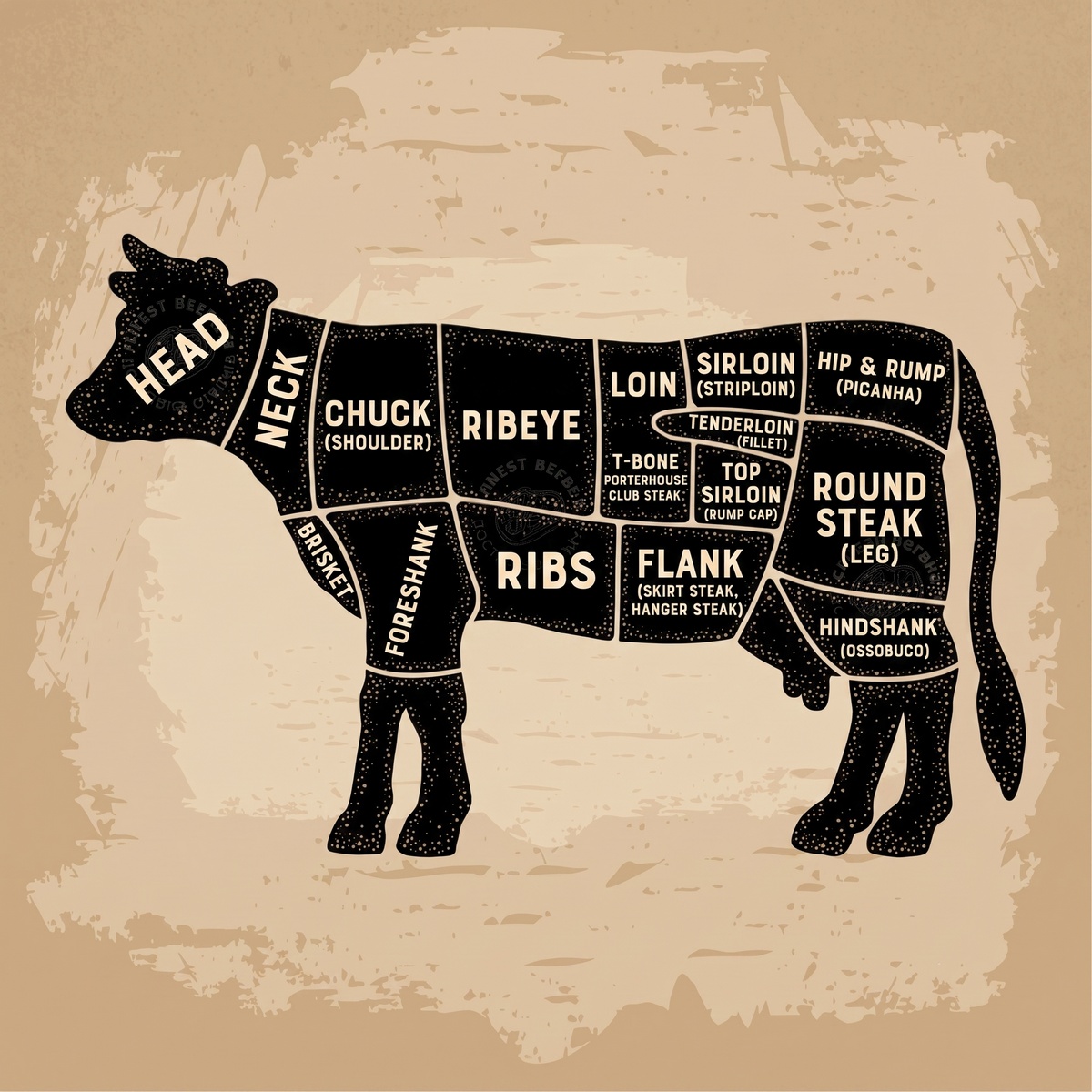
The much-coveted ribeye is cut from the most expensive part of the carcass — the back muscle group, which hardly gets any exercise. That’s why it’s slightly fatty, tender and literally melts in the mouth.
The striploin is that very tender neighbour to the ribeye’s left. The muscle is firmer, but still quite tender and has a distinct meaty texture.
The fillet mignon is the epitome of tenderness, as it’s an internal muscle that barely moves throughout the bull’s entire life.
Whereas, for example, a steak from the neck (which is sometimes passed off as a ‘signature cut’) has already been put through its paces. And even if it’s cut properly, without a marinade or lengthy cooking, it can leave a rather tough impression.
A tip from the butcher: if you’re not sure, it’s always best to go for a cut with a name that sounds familiar — ribeye, New York strip, T-bone.
And ‘steaks from selected beef’ are, unfortunately, often just bits and bobs from a ‘mixed bag’.
Maturation: why the best meat is ‘aged’ meat
It sounds a bit counterintuitive, but meat is like cheese or wine: it needs time. Freshly slaughtered meat is tough and watery.
It still needs to ‘rest’. And this is where the magic of maturation begins.
There are two options:
Wet-aged — the meat matures in a vacuum. The flavour is delicate, the texture smooth, with no unwanted aromas. This is the more budget-friendly and popular option for beginners.
Dry-aged — the meat is aged in the open air, under conditions of high humidity and controlled temperature. A thin crust forms on the outside, whilst the inside develops a concentrated flavour with nutty and buttery notes. This is a true delicacy.
An expert’s opinion? Marco Pierre White, one of Britain’s most famous chefs (and Gordon Ramsay’s mentor), once said:
“Meat without ageing is like wine without fermentation. It exists, but you wouldn’t want to drink it.”
A good online shop will always specify the type of maturation. If it isn’t specified, it’s best to give it a miss.
Because when you choose matured meat, you’re getting more than just a steak — you’re getting character.
Marbling: why ‘fatty’ is a compliment
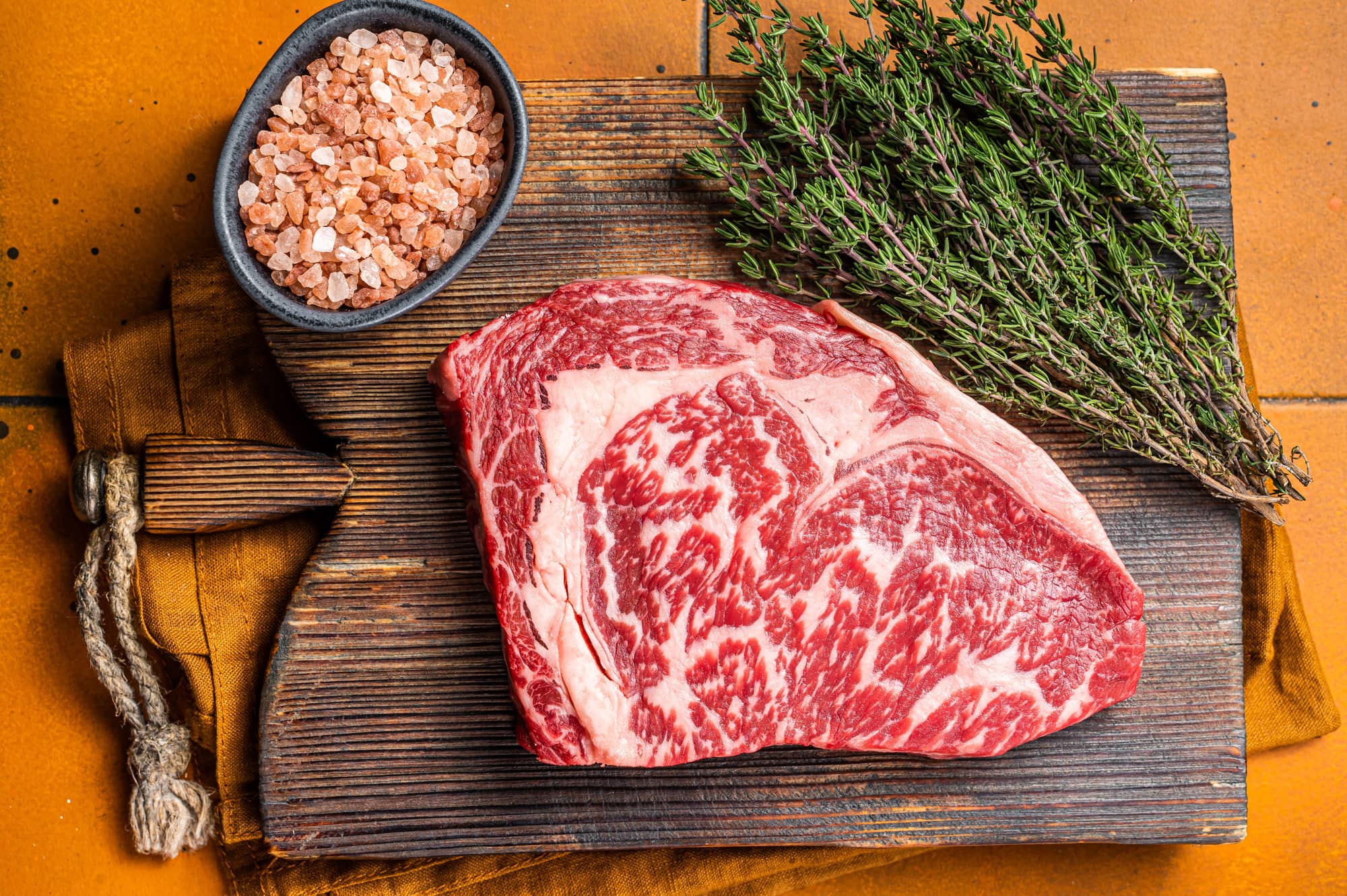
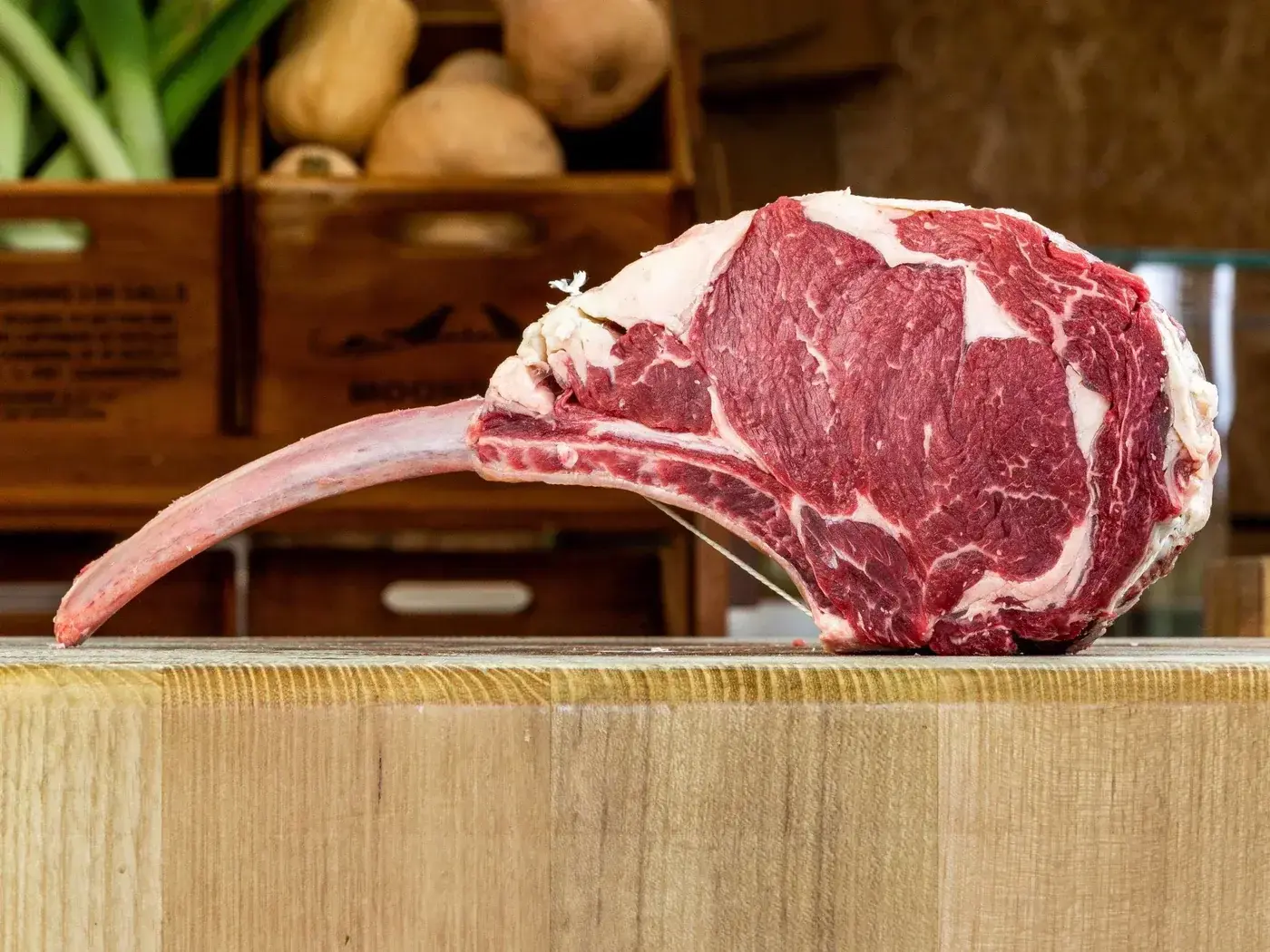
Forget what dieticians have been telling you since the 90s. Marbling is love. It’s those white flecks of intramuscular fat that, when cooked, transform the meat into a succulent marvel.
Without them, even the finest ribeye can end up as dry as a diet chicken breast after a gym session.
Interesting fact: marbling is assessed on a scale. For example, the Japanese BMS system has 12 points:
1–3 — barely noticeable
4–6 — medium (ideal for most palates)
7+ — wow-factor, verging on gastronomic decadence
At top-quality online shops, such as ‘Steaks of the Carpathians’, they’ll show you a photo of the actual steak or specify the marbling grade: Prime, Choice and Select (corresponding to high, medium and low marbling, respectively).
If you see a beef steak with a smooth, completely uniform texture and no fat on it — run a mile. That’s not a ribeye; it’s just meat.
Fat: the enemy or a steak’s best friend?
Now let’s talk about the external fat – the kind that surrounds a steak or runs along the edges – which is often mistakenly thought to be unhealthy.
But in fact, it’s your best friend, if you know what to do with it.
When cooked, this fat:
melts and coats the meat from the inside, making it more tender;
adds flavour, especially in bone-in steaks (T-bone, Porterhouse);
creates an aroma that you can smell even before the steak reaches your plate.
🇫🇷 French chefs generally believe that meat without fat is like a baguette without a crust. And here’s another thought from Francis Malman, a legend of the Argentine grill:
‘Fat is life. The true flavour of meat begins with it.’
Don’t be afraid of fat. You can always trim it off after cooking. But if it’s not there to begin with, you’re missing out on a slice of steaky pleasure.
And once again — look for the photos. In good shops, they don’t hide the fat; they proudly display it. Because a true perfectionist knows: meat without fat is like love without passion.
7. Origin matters: the cow’s life determines its flavour
In the world of steaks, the origin of the meat is like the history of a vineyard in wine. Where and how the animal was reared, what it ate, how much it moved about, and what the climate was like — all of this is literally ‘reflected’ in the flavour of the steak.
Grass-fed, free-range, no antibiotics or growth hormones – that’s the foundation of good meat. Such meat has a firmer texture, a more pronounced meaty flavour and greater health benefits.
And what’s more — a clear conscience with every bite.
For example, ‘Private Butcher’ steaks come from farms where cows graze in the meadows of the Carpathian foothills.
This isn’t a marketing gimmick, but a genuine indicator of quality: green grass, natural feed and a stress-free environment = better meat.
Incidentally, chefs at Michelin-starred restaurants often specify ‘grass-fed’ beef for their signature dishes — because they trust that particular flavour.
In an online shop, you can’t always smell or touch the meat, but you can — and should — read where it comes from. If the seller simply writes ‘beef’ without any specifics — well, you get the picture.
If, however, you see the name of the region, the farm, and the rearing conditions — then you’re not just looking at a piece of meat, but a product you can trust.
8. Cold delivery, or How to get restaurant-level quality instead of ‘meat from the road’
That moment when inspiration is already in the basket, but doubt creeps in: ‘What if it arrives somehow... wrong?’
Sensible. Because delivery is a real crash test for an online steak seller.
Temperature logistics — that is what few people talk about, but everyone wants to be sure of.
A properly packed steak should travel:
in vacuum or airtight packaging;
in a cool box with ice packs or dry ice;
for a maximum of 48 hours without loss of quality.
By the way, an interesting fact: in Japan, where meat is almost a religion, some shops deliver Wagyu in special boxes with temperature sensors.
At ‘Private Butcher’ we don't have sensors yet, but the standards are the same — the steak arrives fresh, like straight from the farm, and not after a minibus ride.
9. Don’t get lost in the catalogue: a piece of advice restaurants won't give you
Online catalogues are not just a ‘list of meat’, but a veritable meat Netflix. But how do you avoid getting lost amongst Tomahawks, Ribeyes, New York strips, and Filet Mignons?
The secret is simple: think not about the name, but about the mood you want to create.
Fancy something quick, filling, and without any unnecessary faff? Go for a Ribeye or a New York.
Planning a romantic dinner with wine? The ideal option is a Filet Mignon.
For a large, loud gathering where you need to impress? Without hesitation — a Tomahawk or a Porterhouse.
Know a bit about marinades and want the best value for money? Go for the Black Angus Chuck Roll.
And if you find it completely difficult to choose, ‘Private Butcher’ has a support team that will guide you without any unnecessary jargon.
Leave your phone number on the website and tell our manager: ‘I want real meat!’ — and they will select it for you (with a bonus thrown in too!)
The final word: enough reading — it’s time to choose. An online steak you’ll want to cook right now
So here’s what's left:
head over to the ‘Private Butcher’ catalogue, find your absolute favourite — and treat yourself to a proper steak weekend.
👉 Because now you aren't choosing at random, but like a true connoisseur.